
Implant-Supported Dentures: Cost, Types, Procedure & Benefits
Implant-supported dentures are a modern alternative to traditional dentures, using dental implants to anchor a prosthesis securely in the mouth.
Unlike conventional dentures that rest on the gums, this solution provides greater stability, comfort, and function.
They are especially beneficial for patients who struggle with loose or uncomfortable dentures.
This approach combines the affordability of dentures with the stability of implants.
What Are Implant-Supported Dentures?
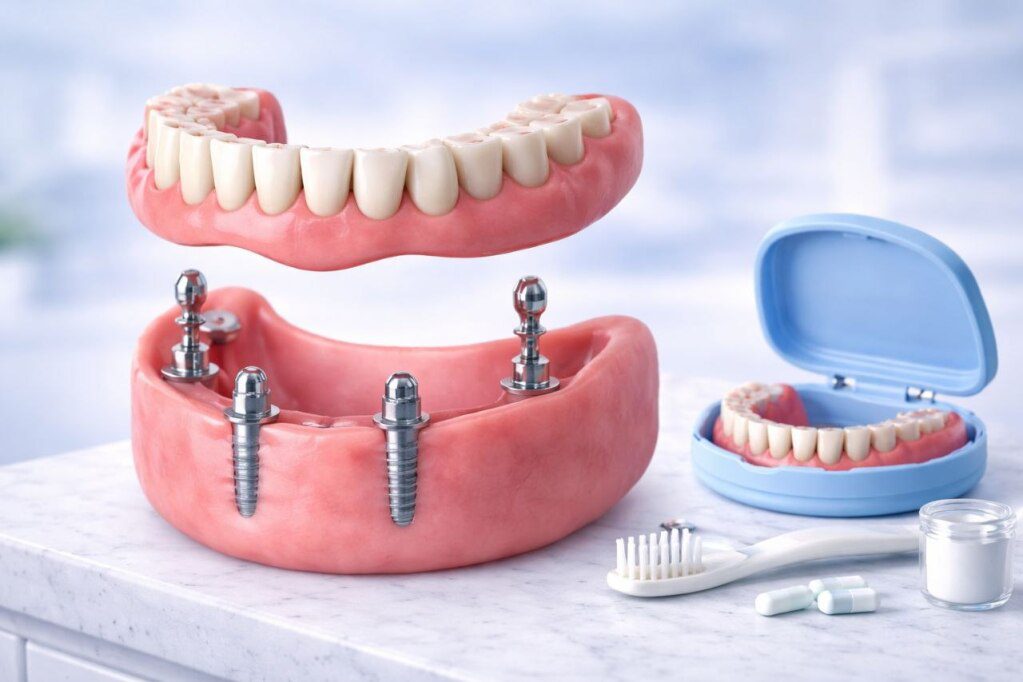
Implant-supported dentures are prosthetic teeth attached to dental implants placed in the jawbone.
These implants act as anchors, preventing the denture from moving or slipping during daily activities.
Depending on the design, the denture may be removable or fixed in place.
Types of Implant-Supported Dentures
There are two main types of implant-supported dentures.
🔹Removable (Overdentures)
These dentures snap onto implants and can be removed for cleaning.
They provide significantly more stability than traditional dentures while remaining easy to maintain.
🔹Fixed Implant-Supported Dentures
These are permanently attached to implants and can only be removed by a dentist.
They offer the highest level of stability and function. Fixed prosthetic options feel more like natural teeth.
Who is a Candidate?
Implant-supported dentures are ideal for patients who:
- Have lost multiple or all teeth
- Experience loose or uncomfortable traditional dentures
- Have sufficient bone to support implants (or are candidates for bone grafting)
They are often recommended for patients seeking a balance between cost and performance.
The Procedure Step by Step
- The process begins with a detailed evaluation, including imaging to assess bone structure.
- Dental implants are then placed into the jawbone under local anesthesia.
- A healing period follows, allowing the implants to integrate with the bone.
- Once healing is complete, the denture is attached to the implants.
In some cases, temporary dentures may be provided during the healing phase.
Recovery and Healing Time
Initial recovery after implant placement takes a few days to a week.
However, full integration of the implants typically takes 3 to 6 months.
Patients may need to follow dietary restrictions during the early healing phase.
Cost of Implant-Supported Dentures
In the United States, implant-supported dentures typically cost:
- $6,000 – $15,000 per arch (removable overdentures)
- $15,000 – $30,000+ per arch (fixed options)
The final cost depends on the number of implants, materials, and the complexity of the case.
This option is generally more affordable than full fixed implant solutions like All-on-4 implants.
Benefits of Implant-Supported Dentures
Implant-supported dentures provide several important advantages:
- They offer improved stability, preventing slipping and discomfort.
- They enhance chewing ability, allowing a more varied diet.
- They help preserve jawbone structure by stimulating the bone.
- They also improve confidence and overall quality of life.
- They are a major upgrade from traditional dentures.
Implant-Supported Dentures vs Traditional Dentures
Traditional dentures rest directly on the gums and may become unstable over time.
Implant-supported dentures are anchored in place, providing better retention and comfort.
They also reduce the risk of bone loss compared to conventional dentures.
Implant-Supported Dentures vs All-on-4 Implants
Both options use implants, but they differ in design and function.
- Implant-supported dentures may be removable and typically use fewer implants.
- All-on-4 implants provide a fixed, non-removable solution with a more natural feel.
The choice depends on budget, preference, and clinical conditions.
Risks and Complications
As with any implant procedure, there are potential risks.
These include infection, implant failure, or irritation of surrounding tissues.
Proper hygiene and regular dental visits are essential to minimize complications.
How Long Do Implant-Supported Dentures Last?
With proper care, implants can last many years or even decades.
The denture itself may require adjustments or replacement over time due to wear.
Clinical Insight
Implant-supported dentures demonstrate how combining prosthetics with implant technology can significantly improve function and comfort.
Even a small number of implants can dramatically enhance denture stability.
When to See a Dentist
You should consider evaluation if:
- Your dentures feel loose or uncomfortable
- You have difficulty chewing
- You want a more stable solution
Early consultation allows for better treatment planning.
Conclusion
Implant-supported dentures are an effective dental treatment for patients seeking improved stability and function compared to traditional dentures.
They offer a balance between cost, comfort, and performance.
The key points are clear:
- They use implants to anchor dentures securely
- They improve stability and chewing ability
- They are more comfortable than traditional dentures
For many patients, they represent a practical step toward better oral health and quality of life.
Frequently Asked Questions
Are implant-supported dentures removable?
Some are removable, while others are fixed.
How many implants are needed?
Typically 2 to 6 implants per arch, depending on the design.
Are they better than traditional dentures?
Yes, they provide significantly more stability and comfort.
How long does the process take?
Several months, including healing time.
Are they expensive?
They are more affordable than full fixed implant solutions, but still a significant investment.
References
Feine, J. S., Carlsson, G. E., Awad, M. A., et al. (2002). The McGill consensus statement on overdentures. International Journal of Prosthodontics, 15(4), 413–414.
Misch, C. E. (2008). Contemporary implant dentistry (3rd ed.). Mosby Elsevier.
Thomason, J. M., Kelly, S. A., Bendkowski, A., & Ellis, J. S. (2012). Two implant-retained overdentures. British Dental Journal, 213(6), E12.