
Panoramic X-Ray: What It Is, Uses, Safety & What to Expect
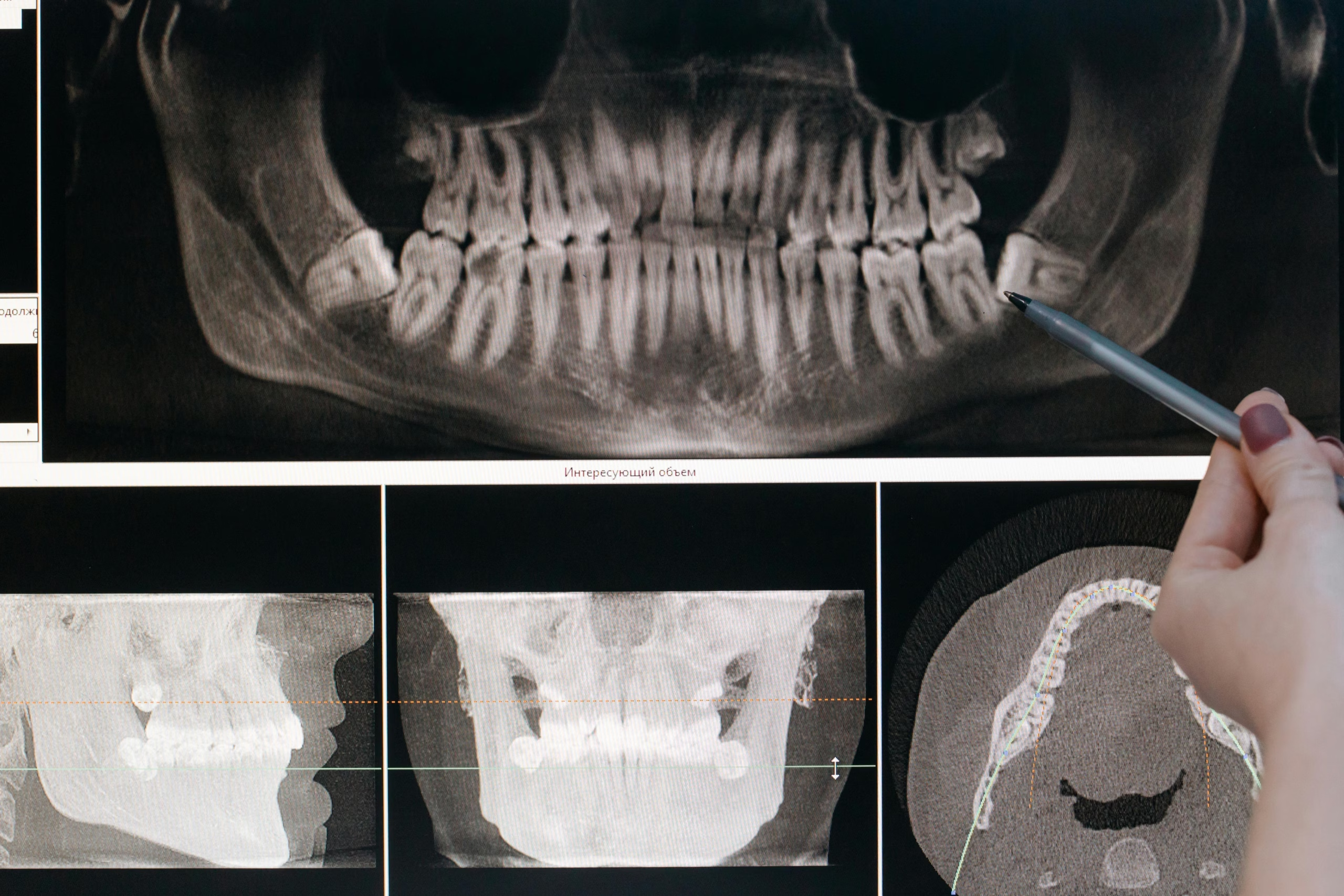
A panoramic x-ray is a type of dental imaging that captures the entire mouth in a single image.
It provides a broad view of:
- Teeth
- Jawbones
- Sinuses
- Temporomandibular joints (TMJ)
👉 Unlike traditional dental x-rays, it shows the full picture, not just individual teeth.
What Is a Panoramic X-Ray?
A panoramic x-ray is a two-dimensional imaging technique that rotates around the head to create a complete view of the oral and facial structures.
It is commonly used in dentistry for diagnosis and treatment planning.
What Does a Panoramic X-Ray Show?
This imaging method allows dentists to evaluate:
- All teeth (erupted and unerupted)
- Jawbone structure
- Wisdom teeth position
- Sinuses
- Bone abnormalities
- Jaw joints (TMJ)
👉 It’s especially useful for detecting issues that are not visible during a routine exam.
Why Is a Panoramic X-Ray Needed?
Dentists use panoramic X-rays for multiple reasons.
🔹 Evaluation of Wisdom Teeth: Helps determine position, angle, and potential complications.
🔹 Orthodontic Planning: Used to assess tooth alignment and jaw relationships.
🔹 Detection of Oral Diseases: Can reveal cysts, tumors, or bone infections.
🔹 Implant Planning: Provides a general overview before placing dental implants.
🔹 Jaw Disorders: Useful in evaluating TMJ problems.
How Does a Panoramic X-Ray Work?
The machine rotates around your head while capturing images.
Process Overview:
- The X-ray unit moves in a semicircle
- The patient remains still
- A digital image is created
👉 The entire process is fast and non-invasive.
What to Expect During the Procedure
A panoramic x-ray is simple and painless.
Step-by-Step:
- You stand or sit in the machine
- A bite guide is placed in your mouth
- Your head is positioned correctly
- The machine rotates around your head
- The scan is completed in seconds
Duration: Usually takes less than 1 minute.
Is a Panoramic X-Ray Safe?
Yes, it is considered safe.
It uses a lower dose of radiation than many medical imaging techniques.
Organizations like the American Dental Association support the use of dental X-rays when clinically necessary.
Radiation Exposure:
- Minimal and controlled
- Modern digital systems reduce exposure further
👉 The diagnostic benefits generally outweigh the risks.
Who Needs a Panoramic X-Ray?
It is commonly recommended for:
- New dental patients
- Orthodontic evaluation
- Wisdom teeth assessment
- Implant planning
- Suspected jaw problems
Panoramic X-Ray vs Traditional Dental X-Rays
These imaging methods serve different purposes.
Feature | Panoramic X-Ray | Traditional X-Rays |
Coverage | Entire mouth | Specific areas |
Detail | Less detailed | Highly detailed |
Use | Overview and planning | Detecting cavities |
👉 They are often used together, not as replacements.
Advantages of Panoramic X-Rays
- Wide view of oral structures
- Quick and comfortable
- Non-invasive
- Useful for complex diagnoses
Limitations of Panoramic X-Rays
- Less detailed than intraoral x-rays
- Not ideal for detecting small cavities
- May require additional imaging
👉 It’s a screening and planning tool, not a complete diagnostic solution.
How Often Should You Get One?
Frequency depends on individual needs.
General Guidelines:
- Every few years for routine evaluation
- More often, if required for treatment planning
👉 Always based on professional recommendation.
Are There Any Risks?
Risks are minimal.
Considerations:
- Low radiation exposure
- Protective measures (lead apron) may be used
👉 The procedure is considered safe for most patients.
Can Pregnant Women Get a Panoramic X-Ray?
It is usually avoided unless necessary.
Important Note:
- Always inform your dentist if you are pregnant
- X-rays are only taken when the benefits outweigh the risks
How to Prepare for a Panoramic X-Ray
Preparation is simple.
Before the Scan:
- Remove jewelry, glasses, or metal objects
- Follow the technician’s instructions
👉 No special preparation is required.
Conclusion
A panoramic x-ray is a valuable diagnostic tool that provides a comprehensive view of the mouth and jaw.
Key takeaways:
- Fast and non-invasive imaging method
- Useful for diagnosis and treatment planning
- Safe with minimal radiation exposure
👉 It plays a critical role in modern dentistry, especially for complex oral health evaluations.
Frequently Asked Questions
Does a panoramic X-ray hurt?
No, it is completely painless.
How long does it take?
Less than a minute for the scan.
Can it detect cavities?
Not as accurately as traditional dental X-rays.
Is it safe for children?
Yes, when clinically necessary and properly performed.
Do I need one regularly?
Only as recommended by your dentist.
References
White, S. C., & Pharoah, M. J. (2014). Oral radiology: Principles and interpretation (7th ed.). Mosby.
American Dental Association. (2012). Dental radiographic examinations: Recommendations for patient selection and limiting radiation exposure.
Rushton, V. E., Horner, K., & Worthington, H. V. (2002). Screening panoramic radiography of adults in general dental practice. British Dental Journal, 192(9), 495–498.