
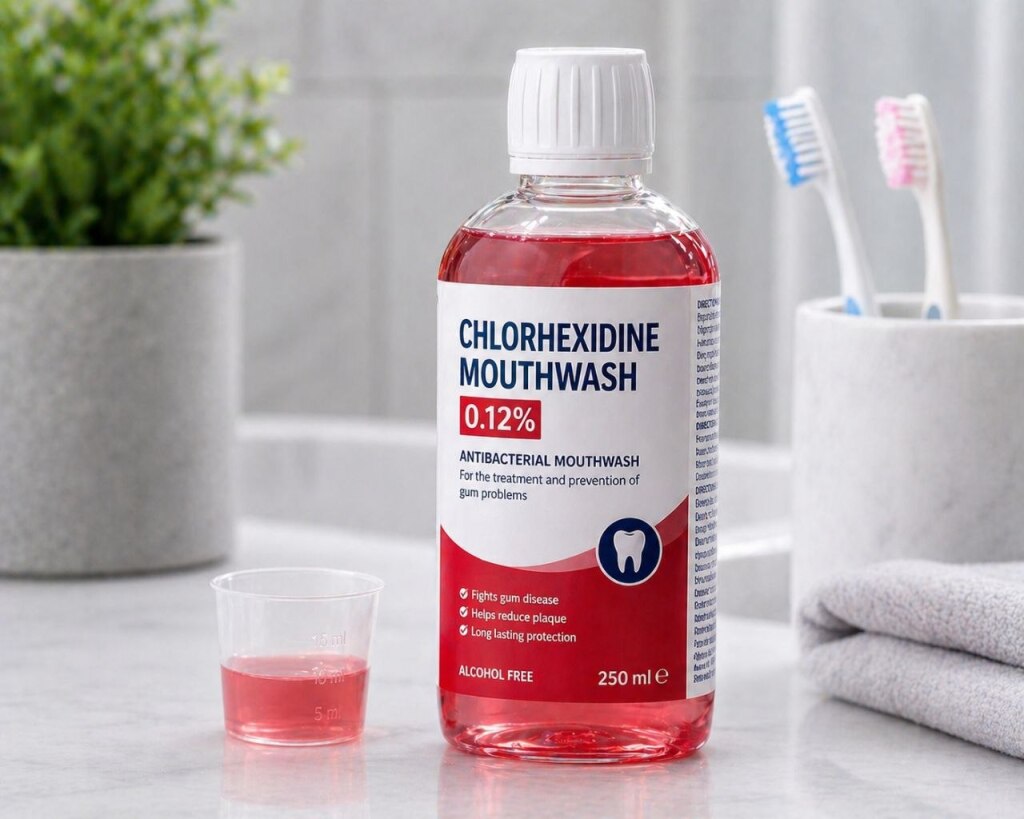
Chlorhexidine: Uses, Benefits, Side Effects & How to Use It Safely
Chlorhexidine is one of the most widely used antiseptics in dentistry for controlling bacteria in the mouth.
It is commonly prescribed as a mouthwash to treat gum disease, infections, and post-surgical care.
👉 Think of it as a powerful antibacterial tool, but one that must be used correctly.
What Is Chlorhexidine?
Chlorhexidine is an antimicrobial agent used to reduce bacteria in the oral cavity.
In dentistry, it is most commonly available as a mouth rinse containing Chlorhexidine gluconate.
It works by:
- Disrupting bacterial cell membranes
- Preventing bacterial growth
- Reducing dental plaque formation
What Is Chlorhexidine Used For?
Chlorhexidine is used in several dental and medical situations.
🔹 Treatment of Gum Disease: It is frequently prescribed for gingivitis and periodontitis. It helps reduce inflammation and bacterial load.
🔹 After Dental Procedures: Dentists often recommend chlorhexidine after tooth extractions, periodontal surgery, or implant placement. It helps prevent infection during healing.
🔹 Plaque Control: Short-term use can significantly reduce plaque accumulation.
🔹 Management of Oral Infections: It may be used for mouth infections, ulcers, and high bacterial risk conditions.
How Chlorhexidine Works
Chlorhexidine has a unique property called substantivity.
This means it binds to oral tissues and continues working over time.
👉 Result: prolonged antibacterial effect even after rinsing.
How to Use Chlorhexidine Mouthwash
Correct use is essential to maximize benefits and avoid side effects.
Instructions for Use:
- Rinse with 10–15 ml
- Swish for 30–60 seconds
- Do not swallow
- Use twice daily (or as prescribed)
Important Tips:
- Do not rinse with water immediately after.
- Avoid eating or drinking for at least 30 minutes.
- Use after brushing, but wait a few minutes.
👉 Timing matters more than people think.
Benefits of Chlorhexidine
🔹 Powerful Antibacterial Action: It significantly reduces harmful oral bacteria.
🔹 Effective for Gum Health: Helps control inflammation and bleeding.
🔹 Long-Lasting Effect: Its substantivity provides extended protection.
🔹 Useful in High-Risk Situations: Ideal for post-surgical care and infection control.
Side Effects of Chlorhexidine
Despite its effectiveness, chlorhexidine is not meant for long-term casual use.
🔸 Common Side Effects:
- Tooth staining (brown discoloration)
- Altered taste sensation
- Increased tartar formation
🔸 Less Common Effects:
- Mouth irritation
- Dryness
- Burning sensation
🔸 Rare Reactions:
- Allergic reactions
👉 Staining is the most common complaint, and a major reason for limited use duration.
How Long Should You Use Chlorhexidine?
Chlorhexidine is usually prescribed for short-term use.
Typical Duration:
- 1 to 2 weeks.
- Sometimes longer under supervision.
👉 Long-term use is generally avoided due to side effects.
Chlorhexidine vs Regular Mouthwash
Not all mouthwashes are the same.
Feature | Chlorhexidine | Regular Mouthwash |
Strength | Very strong | Mild to moderate |
Purpose | Medical treatment | Daily hygiene |
Prescription | Often required | Over-the-counter |
Long-term use | Not recommended | Safe for daily use |
👉 Chlorhexidine is therapeutic, not cosmetic.
When Should You Use Chlorhexidine?
It is typically recommended when:
- You have gum disease
- You’ve had recent dental surgery
- You are at a high risk of infection
👉 It should always be used under professional guidance.
When Should You Avoid It?
Avoid or use cautiously if:
- You need a long-term daily mouthwash
- You are concerned about staining
- You have known allergies
How to Reduce Staining from Chlorhexidine
Staining is common, but manageable.
Tips to Minimize Discoloration:
- Avoid coffee, tea, and red wine
- Maintain good brushing technique
- Get professional dental cleanings
Is Chlorhexidine Safe?
Yes, when used as directed.
It has been extensively studied and widely used in clinical practice.
👉 The key issue is not safety, but appropriate use.
Conclusion
Chlorhexidine is one of the most effective antimicrobial agents in dentistry.
Key takeaways:
- Highly effective against oral bacteria
- Ideal for short-term treatment
- Not suitable for long-term daily use
👉 Used correctly, it can significantly improve oral health in specific situations.
Frequently Asked Questions
Can I use chlorhexidine every day?
Only for a limited time, unless advised by a dentist.
Why does chlorhexidine stain teeth?
It interacts with compounds in food and saliva, leading to discoloration.
Should I rinse with water after using it?
No, as it reduces its effectiveness.
Is chlorhexidine better than regular mouthwash?
It is stronger, but intended for medical use rather than daily hygiene.
Can I use it after brushing?
Yes, but wait a few minutes before rinsing.
References
Jones, C. G. (1997). Chlorhexidine: Is it still the gold standard? Periodontology 2000, 15(1), 55–62.
Van Strydonck, D. A. C., Slot, D. E., Van der Velden, U., & Van der Weijden, F. (2012). Effect of a chlorhexidine mouthrinse on plaque, gingival inflammation and staining. Journal of Clinical Periodontology, 39(11), 1042–1055.
Addy, M., & Moran, J. (1997). Clinical indications for the use of chemical adjuncts to plaque control: Chlorhexidine formulations. Periodontology 2000, 15(1), 52–54.