
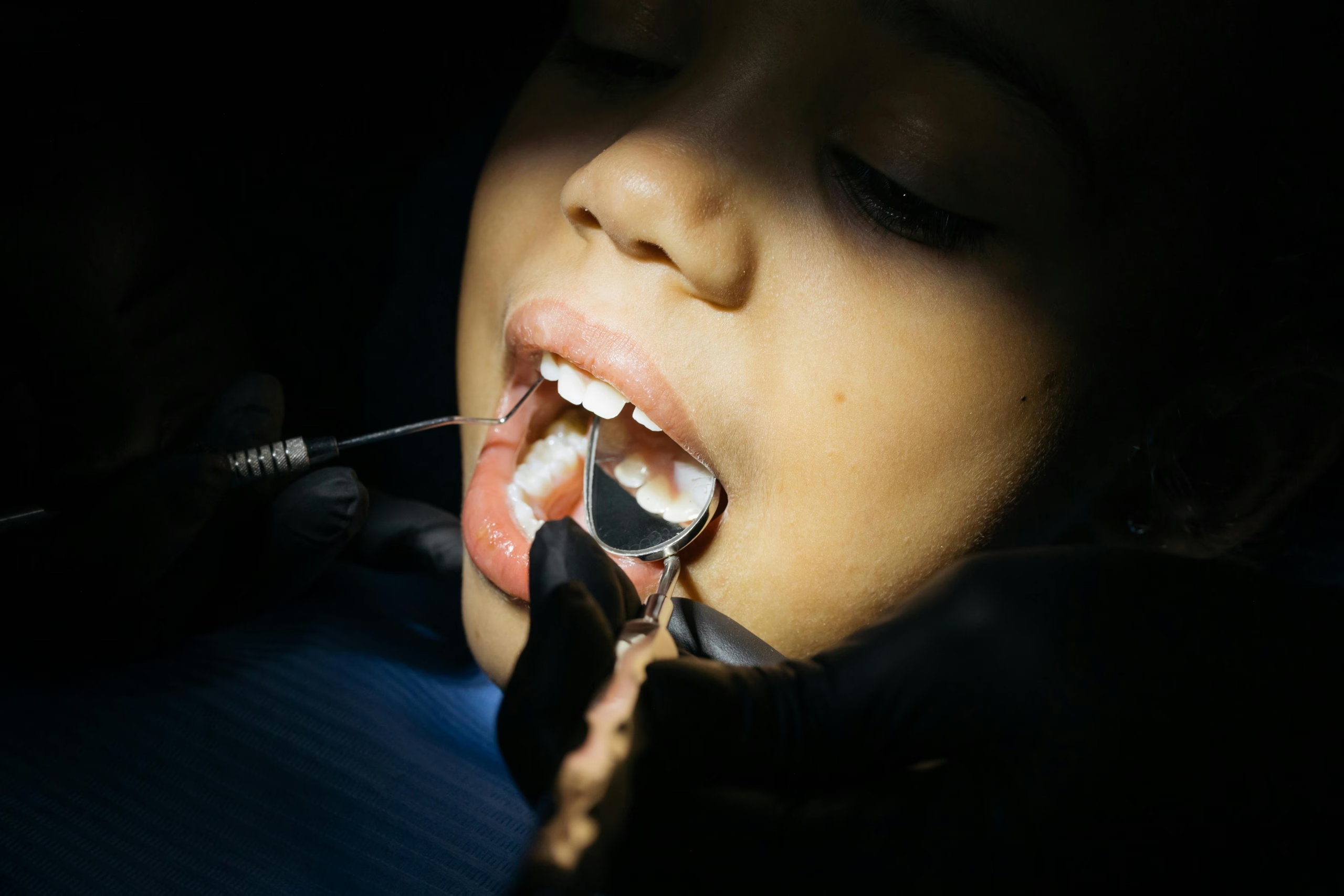
Space Maintainer: Types, Purpose, Cost & When It’s Needed
A space maintainer is a dental appliance used to preserve the space left by a prematurely lost primary (baby) tooth.
When a baby tooth is lost too early, neighboring teeth can shift into the empty space, potentially leading to crowding, misalignment, and future orthodontic problems.
Space maintainers help prevent these issues by holding the space open until the permanent tooth is ready to erupt.
👉 They play a critical role in guiding proper dental development in children.
What Is a Space Maintainer?
A space maintainer is a custom-made dental device designed to keep adjacent teeth from moving into an empty space.
It is most commonly used in pediatric dentistry after the early loss of a primary tooth due to decay, trauma, or extraction.
By preserving the correct spacing, it allows the permanent tooth to erupt in its proper position.
Why Are Space Maintainers Important?
The alignment of permanent teeth depends heavily on the position of primary teeth.
When a baby tooth is lost prematurely, the surrounding teeth may drift into the space, reducing the room available for the permanent tooth.
This can result in:
- Crowding
- Impacted teeth
- Misalignment
- Need for more complex orthodontic treatment later
👉 Preventing space loss early is often simpler than correcting alignment problems later.
When Is a Space Maintainer Needed?
Not every lost baby tooth requires a space maintainer.
The decision depends on several factors, including the child’s age, the tooth lost, and how soon the permanent tooth is expected to erupt.
Dentists evaluate these factors using clinical examination and radiographs to determine whether intervention is necessary.
Types of Space Maintainers
Space maintainers can be broadly categorized into fixed and removable appliances.
🔹Fixed Space Maintainers
Fixed maintainers are attached to the teeth and cannot be removed by the patient.
They are commonly used because they are reliable and require minimal cooperation from the child.
Examples include band-and-loop appliances and lingual arches.
🔹Removable Space Maintainers
Removable maintainers function similarly to orthodontic retainers and can be taken out for cleaning.
They are typically used in older children who can follow instructions and maintain proper hygiene.
How Does a Space Maintainer Work?
The appliance physically blocks adjacent teeth from drifting into the empty space.
By maintaining this gap, it ensures that the permanent tooth has enough room to erupt naturally.
The effectiveness of the device depends on proper fit, consistent use (if removable), and regular monitoring.
Placement Procedure
The process of placing a space maintainer is straightforward and minimally invasive:
- It begins with an evaluation of the child’s dental condition.
- Impressions or digital scans may be taken to create a custom-fit appliance.
- Once ready, the device is placed and adjusted to ensure comfort and proper function.
👉 The procedure is generally quick and well tolerated.
How Long Is It Needed?
A space maintainer is typically kept in place until the permanent tooth begins to erupt.
The duration varies depending on the child’s age and dental development.
Regular follow-up visits are necessary to monitor progress and determine when removal is appropriate.
Care and Maintenance
Proper care is essential to ensure the effectiveness of a space maintainer.
Children should maintain good oral hygiene, including brushing around the appliance carefully.
Sticky or hard foods should be avoided, especially with fixed appliances, as they can damage or dislodge the device.
Regular dental check-ups help detect any issues early.
Potential Risks and Complications
Although space maintainers are generally safe, complications can occur if they are not properly maintained.
These may include irritation of the gums, plaque accumulation, or appliance breakage.
In rare cases, failure to monitor the appliance can lead to improper tooth eruption.
👉 Regular supervision by a dentist minimizes these risks.
Cost of a Space Maintainer
The cost varies depending on the type of appliance and complexity of the case.
- Fixed space maintainers price: $200 – $500.
- Removable space maintainers price: $150 – $400.
Fixed maintainers are often more commonly used and may be more cost-effective in the long term due to their reliability.
In some cases, dental insurance may cover part of the treatment, especially if it is considered preventive.
Clinical Insight
Space maintainers are a preventive tool that reflects a key principle in dentistry: early intervention reduces future complexity.
Preserving space today can prevent extensive orthodontic treatment later.
When to See a Dentist
You should consult a dentist if:
- A child loses a baby tooth earlier than expected
- There are concerns about spacing or alignment
- A dentist has recommended evaluation after extraction
Early assessment ensures that appropriate measures are taken at the right time.
Conclusion
Space maintainers are essential devices in pediatric dentistry that help preserve proper spacing after early tooth loss.
They play a crucial role in guiding the eruption of permanent teeth and preventing future alignment problems.
The key points are clear:
- They prevent neighboring teeth from shifting
- They support proper dental development
- Early use can reduce the need for complex treatments later
👉 When indicated, space maintainers are a simple but highly effective preventive solution.
Frequently Asked Questions
Do all children need a space maintainer after losing a tooth?
No, it depends on the timing and position of the lost tooth.
Is a space maintainer painful?
No, it is generally comfortable after initial adjustment.
Can a child eat normally with a space maintainer?
Yes, but certain sticky or hard foods should be avoided.
How often should it be checked?
Regular dental visits are recommended to monitor its function.
What happens if it breaks?
It should be repaired or replaced promptly to maintain effectiveness.
References
Pinkham, J. R., Casamassimo, P. S., Fields, H. W., McTigue, D. J., & Nowak, A. J. (2013). Pediatric dentistry: Infancy through adolescence (5th ed.). Elsevier.
Proffit, W. R., Fields, H. W., & Sarver, D. M. (2018). Contemporary orthodontics (6th ed.). Elsevier.
American Academy of Pediatric Dentistry. (2020). Guideline on management of the developing dentition and occlusion. AAPD Reference Manual.