
Interdental Brushes: What They Are, Benefits & How to Use Them Properly
Interdental brushes are small cleaning tools designed to remove plaque and food debris from between the teeth.
They are one of the most effective ways to clean areas that regular toothbrushes and even floss can sometimes miss.
👉 If brushing is step one, interdental cleaning is what takes your oral hygiene to the next level.
What Are Interdental Brushes?
Interdental brushes are tiny brushes with a thin wire core and soft bristles, specifically designed to fit between teeth.
They are used to clean:
- Spaces between teeth (interdental spaces)
- Around dental work
- Along the gumline
Unlike dental floss, they physically scrub plaque away, rather than just sliding between surfaces.
Why Interdental Cleaning Matters
Toothbrushing alone does not clean all tooth surfaces.
👉 In fact, up to 30–40% of tooth surfaces are between teeth.
Without proper cleaning, these areas become a hotspot for:
- Plaque accumulation
- Cavities
- Gum disease
Benefits of Interdental Brushes
Interdental brushes offer several advantages over other cleaning methods.
🔹 More Effective Plaque Removal: They remove plaque mechanically, making them highly effective, especially in larger spaces.
🔹 Better for Gum Health: Regular use can reduce gum inflammation, decrease bleeding, and improve overall periodontal health.
🔹 Easier to Use Than Floss (for Many People): They are often easier to handle, especially for beginners, older adults, and people with limited dexterity.
🔹 Ideal for Dental Work: Interdental brushes are particularly useful for cleaning around braces, dental implants, bridges, and crowns.
Interdental Brushes vs Dental Floss
Both tools are useful, but they are not identical.
Feature | Interdental Brushes | Dental Floss |
Cleaning method | Scrubbing | Sliding |
Best for | Larger spaces | Tight contacts |
Ease of use | Easier for many | Requires technique |
Effectiveness | Often higher in open spaces | Effective in tight areas |
👉 In many cases, interdental brushes can be more effective than dental floss, especially for gum health.
Who Should Use Interdental Brushes?
They are suitable for many people, but especially beneficial for:
- Individuals with gum disease
- People with braces
- Patients with dental implants
- Those with wider gaps between teeth
- People who struggle with flossing
How to Choose the Right Size
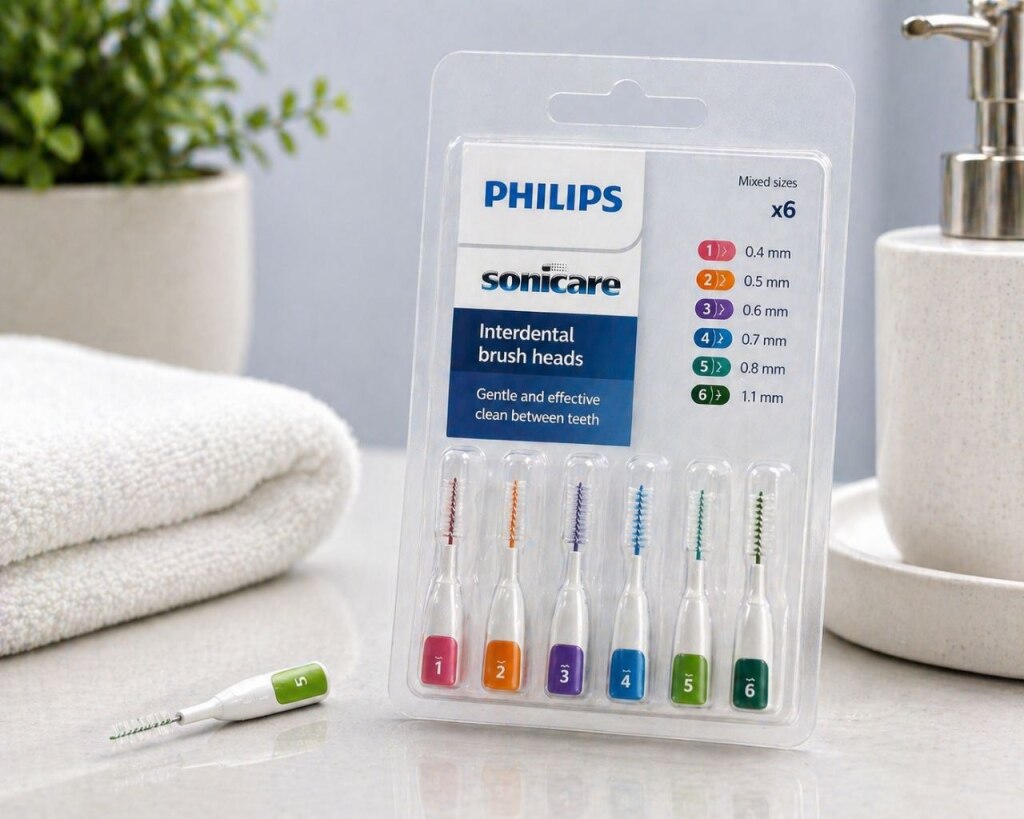
Interdental brushes come in different diameters, often color-coded.
Key Principles:
- The brush should fit snugly but not forcefully
- Too small = ineffective cleaning
- Too large = risk of gum injury
👉 Dentists often recommend trying multiple sizes for different areas.
How to Use Interdental Brushes Properly
Using them correctly is essential for effectiveness.
Step-by-Step Guide:
- Choose the correct size
- Gently insert the brush between teeth
- Move it back and forth a few times
- Do not force it into tight spaces
- Rinse the brush after use
Frequency: Use once daily, preferably at night, before or after brushing. Consistency is more important than perfection.
Are Interdental Brushes Safe?
Yes, when used correctly.
Safety Tips:
- Do not force the brush
- Use the correct size
- Replace worn brushes regularly
Improper use can cause:
- Gum irritation
- Minor bleeding (especially at the beginning)
👉 Mild bleeding can be normal initially but should improve over time.
Common Mistakes to Avoid
Avoid these to maximize benefits:
- Using the wrong size
- Skipping daily use
- Forcing the brush into tight spaces
- Not cleaning the brush after use
Interdental Brushes for Braces and Implants
These are one of the best tools for people with dental appliances.
💠 Braces: They help clean around brackets and wires where plaque easily accumulates.
💠 Implants: They allow safe and effective cleaning around implant structures without damaging them.
Do Dentists Recommend Interdental Brushes?
Yes. Many dental professionals consider them one of the most effective tools for interdental cleaning, particularly for patients with gum issues.
Can You Replace Floss with Interdental Brushes?
It depends.
- For tight spaces → dental floss may still be needed
- For wider spaces → interdental brushes may be superior
👉 In some cases, using both provides the best results.
Conclusion
Interdental brushes are a powerful and often underused tool for improving oral hygiene.
Key takeaways:
- They clean areas that toothbrushes cannot reach
- They are highly effective for gum health
- They are easier to use than floss for many people
👉 Adding interdental brushes to your routine can significantly improve your oral health long-term.
Frequently Asked Questions
Are interdental brushes better than floss?
They can be more effective in larger spaces, especially for gum health.
Can interdental brushes damage gums?
Not if used correctly with the right size.
How often should I use interdental brushes?
Once daily is recommended.
Do interdental brushes replace brushing?
No. They are a complement, not a replacement.
Why do my gums bleed when I use them?
Mild bleeding may occur initially due to inflammation, but it usually improves with regular use.
References
Slot, D. E., Dörfer, C. E., & Van der Weijden, G. A. (2008). The efficacy of interdental brushes on plaque and parameters of periodontal inflammation: A systematic review. International Journal of Dental Hygiene, 6(4), 253–264.
Worthington, H. V., MacDonald, L., Poklepovic Pericic, T., et al. (2019). Interdental brushing for the prevention and control of periodontal diseases and dental caries in adults. Cochrane Database of Systematic Reviews, 2019(4).