
Metal Braces: Cost, Treatment Time, Pros & Cons Explained
Metal braces are the most common and time-tested method for straightening teeth and correcting bite problems.
They use metal brackets and wires to gradually move teeth into proper alignment.
Despite newer options, they remain the most powerful and reliable orthodontic treatment.
What Are Metal Braces?
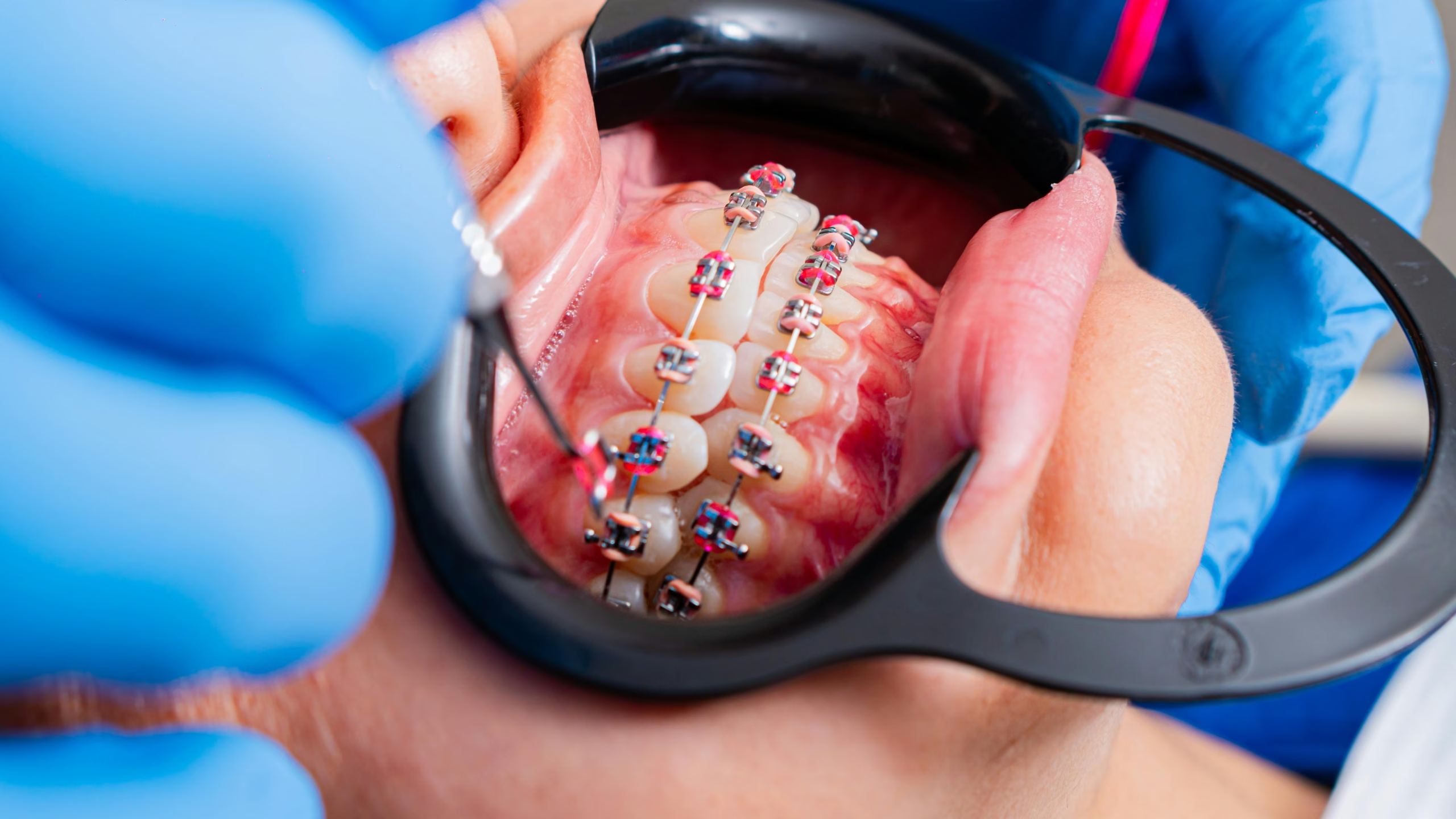
Metal braces consist of small metal brackets bonded to the teeth and connected by an archwire.
Elastic bands (ligatures) are used to hold the wire in place and apply controlled pressure.
This system gradually shifts teeth into the desired position over time.
How Metal Braces Work
Braces apply continuous pressure to teeth, stimulating bone remodeling.
As pressure is applied, the bone around the teeth breaks down and rebuilds, allowing movement.
Orthodontists adjust the wires periodically to guide this process.
Tooth movement is a biological process, not just mechanical.
Who Is a Candidate for Metal Braces?
Metal braces are suitable for patients with:
- Mild to severe crowding
- Spacing issues
- Complex bite problems (overbite, underbite, crossbite)
- Jaw alignment issues
They can treat almost any orthodontic case.
Treatment Duration
Treatment time varies depending on complexity.
Most cases take 18 to 24 months, though some may be shorter or longer.
Regular adjustments are required throughout the process.
Cost of Metal Braces
In the United States, metal braces typically cost:
- $3,000 – $7,000+
Costs vary based on treatment complexity and provider experience.
They are often more affordable than newer orthodontic systems.
Benefits of Metal Braces
Metal braces offer several key advantages:
- They are highly effective for complex cases.
- They do not rely on patient compliance (unlike removable aligners).
- They are durable and less likely to be lost or damaged.
- They are often more cost-effective than alternative treatments.
👉 Reliability is their biggest strength.
Drawbacks
Despite their effectiveness, metal braces have some disadvantages:
- They are highly visible, which may affect aesthetics.
- They can cause irritation or discomfort, especially after adjustments.
- They require dietary restrictions to avoid damaging the brackets.
- Oral hygiene can be more challenging.
👉 Aesthetics is their biggest weakness.
Metal Braces vs Damon Braces
Metal braces use elastic ties, while Damon braces use a self-ligating system.
Damon braces may reduce friction and require fewer adjustments.
Both are effective, but the overall outcome depends on the orthodontist.
The difference lies in mechanics, not effectiveness.
Metal Braces vs Invisalign
Metal braces are fixed and do not require patient compliance.
Invisalign is removable, more aesthetic, but requires discipline.
Braces are better for complex cases, while Invisalign is preferred for convenience.
👉 Braces = power
👉 Invisalign = aesthetics
Daily Life with Metal Braces
- Patients must maintain excellent oral hygiene to prevent plaque buildup.
- Certain foods (hard, sticky) should be avoided to prevent damage.
- Regular orthodontic visits are required for adjustments.
- Initial discomfort is common but usually temporary.
Clinical Insight
Metal braces remain the gold standard in orthodontics for complex cases.
Their effectiveness is supported by decades of clinical evidence and predictable outcomes.
When to See an Orthodontist
You should consider metal braces if:
- You have moderate to severe alignment issues
- You need reliable, comprehensive treatment
- You are not concerned about aesthetics
Early evaluation improves treatment outcomes and planning.
Conclusion
Metal braces are a proven and highly effective orthodontic treatment capable of correcting a wide range of dental and bite issues.
Despite newer alternatives, they remain a cornerstone of modern orthodontics.
The key points are clear:
- They use brackets and wires to move teeth
- They can treat simple to complex cases
- They are reliable and cost-effective
👉 For many patients, they remain the most dependable option.
Frequently Asked Questions
Are metal braces painful?
Some discomfort is normal, especially after adjustments, but it is usually temporary.
How long do metal braces take?
Typically 18 to 24 months, depending on the case.
Are metal braces better than Invisalign?
They are better for complex cases, while Invisalign offers better aesthetics.
Can I eat normally with braces?
Certain foods should be avoided to prevent damage.
Are metal braces cheaper than other options?
They are often more affordable than advanced systems.
References
Proffit, W. R., Fields, H. W., Sarver, D. M. (2018). Contemporary orthodontics (6th ed.). Elsevier.
Fleming, P. S., & Johal, A. (2010). Self-ligating brackets in orthodontics. The Angle Orthodontist, 80(3), 575–584.
Littlewood, S. J., et al. (2006). Orthodontic retention. Journal of Orthodontics, 33(3), 205–212.