
Mucocele: Symptoms, Causes, and Treatment Options
A mucocele is a common, harmless fluid-filled lesion that forms inside the mouth, often due to trauma or blockage affecting a salivary gland.
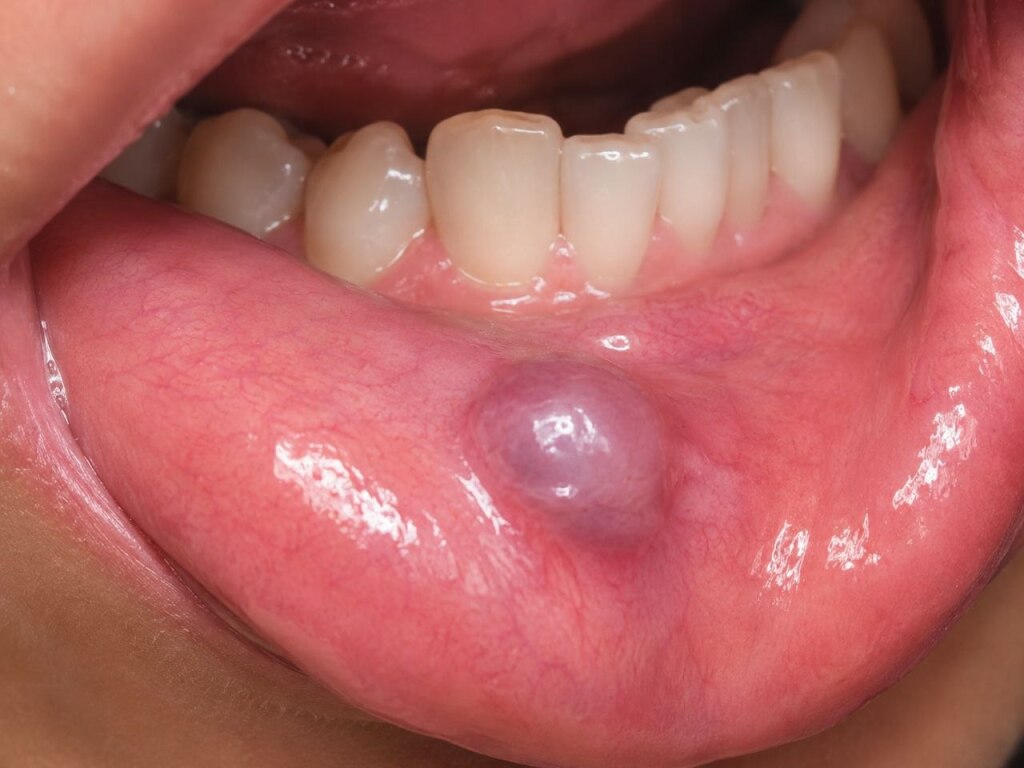
It frequently appears as a soft, translucent, or bluish bump, especially on the inner lower lip.
Although many mucoceles are painless, they can be bothersome, interfere with speaking or chewing, or recur if the underlying cause is not addressed.
This article explains what an oral mucocele is, its causes, treatment options, and when to seek professional care.
What Is a Mucocele?
A mucocele is a mucus-filled cyst-like lesion that develops when saliva leaks into surrounding tissues after damage to a minor salivary gland duct.
It is often considered a mucus extravasation phenomenon, though some lesions can involve mucus retention.
Oral mucoceles most commonly occur on:
- Inner lower lip
- Floor of the mouth
- The inside of the cheeks
- Underside of the tongue
When a mucocele occurs on the floor of the mouth, it may be called a ranula.
Symptoms of a Mucocele
Symptoms may vary depending on size and location.
Common features may include:
- Soft, round bump inside the mouth
- Clear, bluish, or pinkish swelling
- Painless lesion in many cases
- Fluctuating size
- Recurrent swelling
- Discomfort if repeatedly bitten
Many people notice the lesion suddenly after lip biting or minor trauma.
What Causes a Mucocele?
Mucoceles often develop when saliva cannot drain normally.
Possible causes include:
🔸 Lip Biting or Trauma: Repeated biting can damage salivary ducts.
🔸 Salivary Duct Injury: Trauma may cause mucus to leak into the surrounding tissue.
🔸 Blocked Salivary Gland Duct: Obstruction may lead to mucus retention.
🔸 Chronic Irritation: Repeated friction or tissue irritation may contribute.
How Is a Mucocele Diagnosed?
Diagnosis often involves:
- Clinical oral examination
- Review of symptoms
- Evaluation of lesion appearance
- Sometimes a biopsy is performed if the diagnosis is uncertain
A professional evaluation is important because some oral lumps may resemble other lesions.
How Is a Mucocele Treated?
Some mucoceles resolve on their own. Others may persist or recur and require treatment.
Possible management options include:
🔹 Observation: Small superficial lesions may sometimes disappear without intervention.
🔹 Surgical Removal: Persistent or recurrent mucoceles may be removed.
🔹 Removal of Associated Minor Salivary Gland: This may help reduce recurrence in some cases.
🔹 Marsupialization: Sometimes used in selected cases, particularly for larger lesions.
Treatment depends on lesion type, size, and recurrence.
Self-Care Tips for a Mucocele
Supportive care may help prevent irritation.
Consider:
- Avoid biting or picking at the lesion
- Avoid attempting to pop it
- Reduce trauma to the area
- Maintain good oral hygiene
- Monitor for changes in size or appearance
Trying to rupture a mucocele yourself may worsen irritation. ❌
Can a Mucocele Go Away on Its Own?
Some small mucoceles may rupture and resolve spontaneously.
Others may recur repeatedly or persist for weeks to months.
If a lesion does not improve or keeps returning, evaluation is a good idea.
When Should You See a Dentist or Specialist?
You should seek evaluation if you have:
- A bump that persists for more than two weeks
- A lesion that keeps returning
- Rapid enlargement
- Pain or interference with eating
- A swelling under the tongue
- Uncertainty about whether it is a mucocele
Persistent oral lumps should not be ignored.
Conclusion
A mucocele is a common mucus-filled oral lesion often caused by trauma or blockage involving a minor salivary gland.
Some mucoceles go away on their own, while others may need treatment if persistent or recurrent.
If you notice a bump inside your mouth that does not resolve or keeps returning, a dental professional can help determine whether it is a mucocele or another kind of oral disease.
FAQ About Mucoceles
Is a Mucocele Dangerous?
Most oral mucoceles are benign and not dangerous. However, persistent oral lesions should be examined to confirm the diagnosis.
Can a Mucocele Turn Into Cancer?
No, mucoceles themselves are not related to oral cancer. However, other oral lesions may sometimes mimic a mucocele, which is why diagnosis matters.
Should You Pop a Mucocele?
No. Popping or cutting a mucocele at home may cause injury, infection, or recurrence.
Mucocele vs Canker Sore: What Is the Difference?
A mucocele is a fluid-filled swelling. A canker sore is a painful ulcer. They are different conditions, although they may both occur inside the mouth.
Can Mucoceles Come Back After Treatment?
They can recur, particularly if the underlying gland issue remains or repeated trauma continues.
References
Nallasivam, K. U., & Sudha, B. R. (2015). Oral mucocele: Review of literature and a case report. Journal of Pharmacy & Bioallied Sciences, 7(Suppl 2), S731. https://doi.org/10.4103/0975-7406.163516
National Institute of Dental and Craniofacial Research. (n.d.). Salivary gland disorders. U.S. Department of Health and Human Services.