
Single Tooth Dental Implant: Cost, Procedure, Benefits & Alternatives
A single tooth dental implant is one of the most effective ways to replace a missing tooth, restoring both function and aesthetics.
Unlike other options, it replaces the entire tooth structure, from root to crown.
This makes it the most natural and long-lasting solution available.
What Is a Single-tooth dental implant?
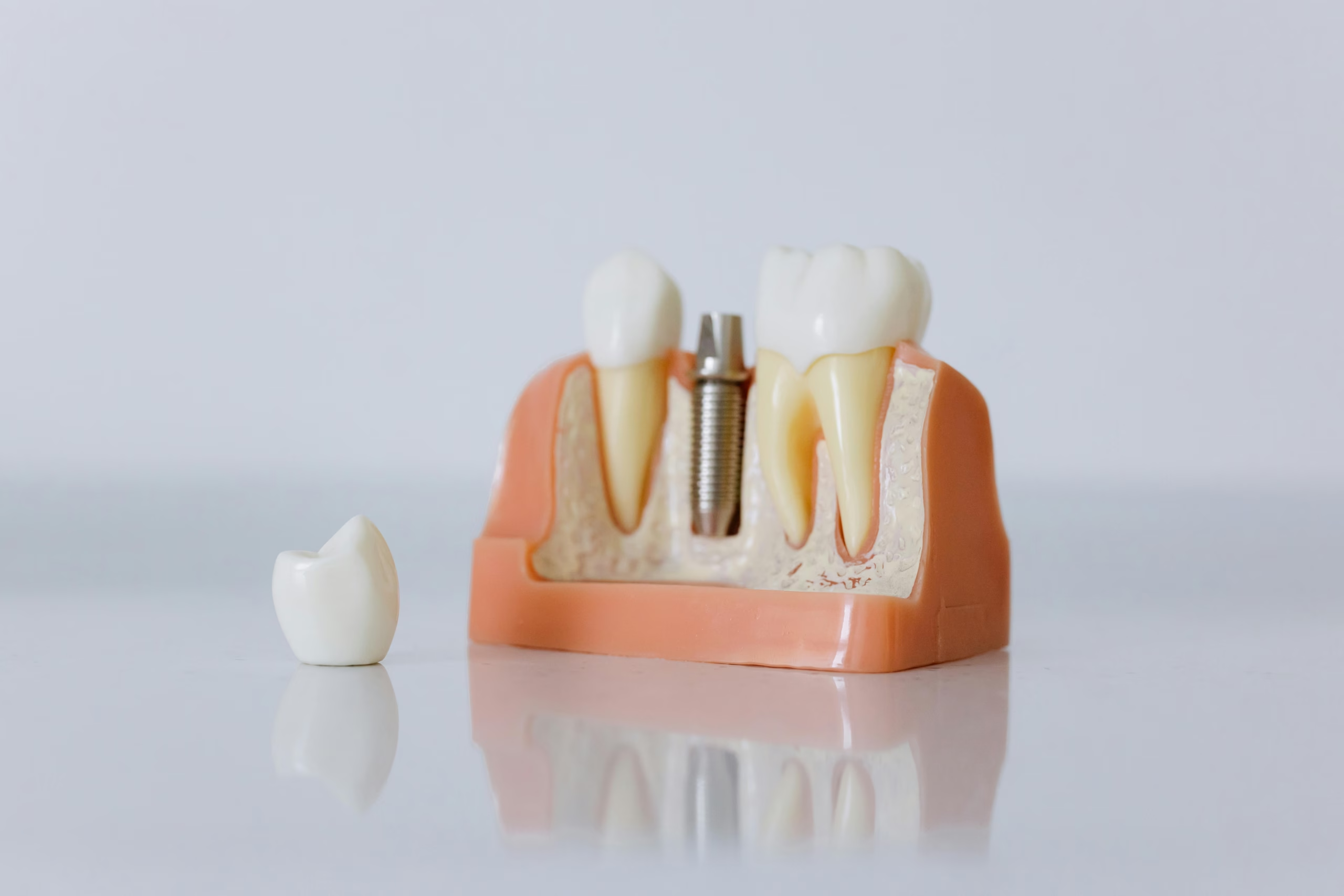
A single tooth implant consists of three main components:
- A titanium post placed in the jawbone (acts as the root)
- An abutment that connects the implant to the crown
- A custom Dental crown
Together, these components replicate a natural tooth in both appearance and function.
Who Needs a Single Tooth Implant?
This treatment is ideal for patients who:
- Have lost one tooth due to decay, trauma, or extraction
- Have a healthy jawbone or are candidates for bone grafting
- Want a long-term, fixed solution
👉 It’s the gold standard for replacing one missing tooth.
Single Tooth Implant Procedure (Step-by-Step)
The process typically occurs in stages:
- Consultation and Planning: An oral surgeon evaluates your oral health and bone structure using imaging.
- Implant Placement: A titanium post is surgically placed into the jawbone.
- Healing (Osseointegration): The implant fuses with the bone over 3 to 6 months. This is what gives implants their strength and stability.
- Abutment Placement: A connector is attached to support the crown.
- Crown Placement: A custom Dental crown is placed to complete the restoration.
How Long Does It Take?
The full process typically takes 3 to 6 months, depending on healing time and case complexity. In some cases, immediate implants may be possible.
Cost of a Single Tooth Dental Implant
In the United States, the cost typically ranges from:
- $3,000 – $6,500+ per tooth
This usually includes:
- Implant placement
- Abutment
- Crown
👉 Additional procedures like bone grafts can increase the cost.
Benefits of a Single Tooth Implant
This treatment offers major advantages:
- It preserves the jawbone and prevents bone loss.
- It does not affect adjacent teeth (unlike bridges).
- It looks and functions like a natural tooth.
- It provides a long-lasting solution.
👉 It’s the closest thing to a real tooth.
Risks and Considerations
Although highly successful, dental implants are not risk-free.
Possible issues include:
- Infection
- Implant failure (rare)
- Need for bone grafting
- Healing complications
👉 Success rates are typically above 95% when properly planned.
Alternatives to a Single Tooth Implant
💠Dental Bridge
A Dental bridge uses adjacent teeth for support. It’s faster and sometimes cheaper, but requires altering healthy teeth.
💠Removable Partial Denture
A removable option that replaces one or more missing teeth. It is less stable and feels less natural than implants.
Implant vs Bridge (Quick Comparison)
Feature | Implant | Bridge |
Affects adjacent teeth | ❌ No | ✅ Yes |
Longevity | 10–25+ years | 5–15 years |
Bone preservation | ✅ Yes | ❌ No |
Cost | Higher upfront | Lower upfront |
👉 Bridges win short-term cost, but Implants win long-term cost and stability.
How Long Do Single Tooth Implants Last?
With proper care, implants can last 20 years or more, often a lifetime. The crown may need replacement after 10–15 years due to wear.
Clinical Insight: Dental implants rely on a process called osseointegration, where the implant fuses with bone.
This biological integration is what makes implants more stable than any other replacement option.
Daily Care and Maintenance
Maintaining an implant is similar to caring for natural teeth.
- Brush and floss daily
- Avoid smoking (major risk factor for failure)
- Attend regular dental check-ups
When to See a Dentist
You should consider a single tooth implant if:
- You are missing one tooth
- You want a permanent, natural-looking solution
- You want to preserve your jawbone and oral health
Early treatment helps prevent bone loss and shifting of adjacent teeth.
Conclusion
A single-tooth dental implant is the most advanced and effective dental treatment for replacing a missing tooth.
It restores function, preserves bone, and provides long-term stability.
The key points are clear:
- It replaces the entire tooth structure
- It offers superior durability and aesthetics
- It is the best long-term solution for one missing tooth
👉 For most patients, it is the gold standard treatment.
Frequently Asked Questions
Is a single tooth implant painful?
The procedure is performed under anesthesia, so discomfort is minimal.
How long does the process take?
Typically 3 to 6 months, depending on healing.
Is it better than a bridge?
Yes, in terms of longevity and preserving adjacent teeth.
Can anyone get an implant?
Most people can, but adequate bone is required.
How long does it last?
20 years or more with proper care.
References
Misch, C. E. (2008). Contemporary implant dentistry (3rd ed.). Mosby Elsevier.
Esposito, M., et al. (2010). Interventions for replacing missing teeth. Cochrane Database of Systematic Reviews.
Albrektsson, T., & Wennerberg, A. (2004). Oral implant surfaces. The International Journal of Prosthodontics.