
Cracked Corners of the Mouth: Causes, Treatment & How to Heal Fast
Cracked corners of the mouth are a common and often painful condition that affects the angles where the lips meet.
Medically known as angular cheilitis, this problem goes beyond simple dryness; it is usually the result of infection, irritation, or an underlying imbalance in the body.
While it may seem minor, persistent cracks can interfere with eating, speaking, and overall comfort.
👉 The key is understanding that this condition is rarely just “dry lips.”
What Are Cracked Corners of the Mouth?
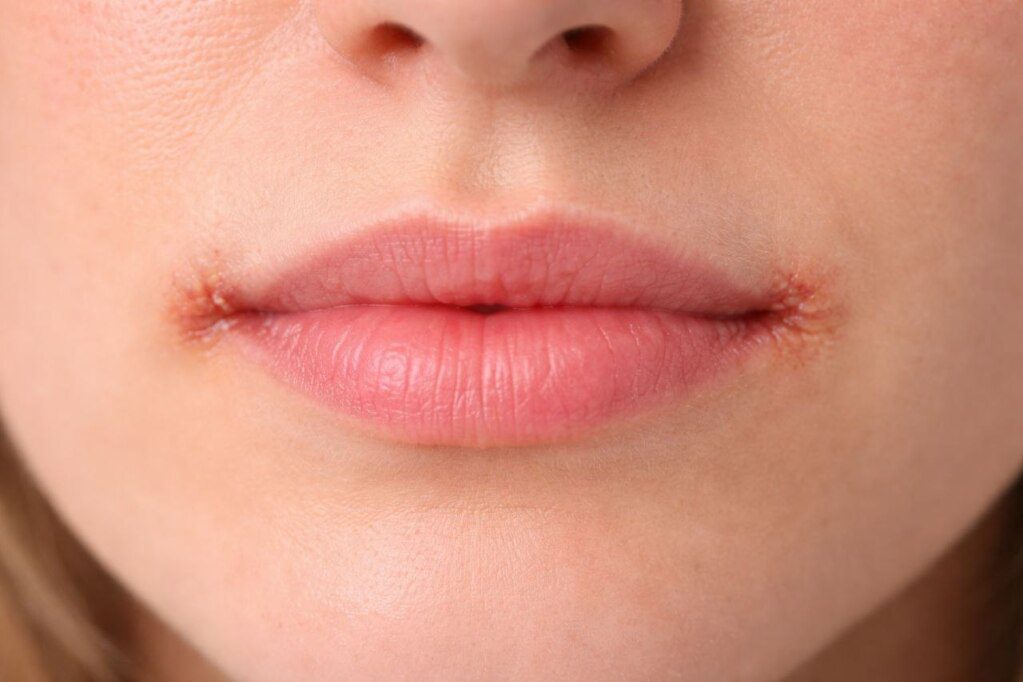
Cracked corners of the mouth refer to inflammation and splitting of the skin at the lip angles, often accompanied by redness, soreness, and sometimes bleeding.
Unlike chapped lips, which affect the entire lip surface, this condition is localized specifically at the corners.
In many cases, it involves a combination of fungal and bacterial infection, particularly from organisms like Candida and Staphylococcus.
What Do They Look Like?
The appearance can vary depending on severity and cause.
In mild cases, the corners may simply look dry and slightly red.
More advanced cases can present with visible cracks, crusting, swelling, or even ulceration.
The area may appear white and soggy due to constant moisture or, conversely, dry and scaly if irritation dominates.
Opening the mouth often worsens the cracks, causing pain or minor bleeding.
Why Do Cracked Corners of the Mouth Happen?
This condition typically develops when moisture becomes trapped at the corners of the mouth, creating an environment where microorganisms can grow.
Saliva plays a central role. When it accumulates in the lip folds, especially during sleep or in people with certain anatomical features, it softens the skin and makes it more vulnerable to breakdown.
Once the skin barrier is compromised, fungi and bacteria can colonize the area, leading to inflammation and delayed healing.
Common Causes
Some of the most frequent causes are:
- Excessive saliva exposure, often due to lip licking, drooling during sleep, or poorly fitting dentures.
- Nutritional deficiencies, particularly iron and B vitamins, can weaken the skin and increase susceptibility.
- Fungal infections, especially those related to oral yeast overgrowth, are also a major contributor.
Other factors include dehydration, smoking, chronic illness, and conditions that affect the immune system.
The Role of Infection
In many cases, cracked corners of the mouth are not just mechanical injuries, they are infected lesions.
Fungi like Candida albicans thrive in warm, moist environments, making the corners of the mouth an ideal location.
Bacteria can also be involved, either alone or in combination with fungal organisms.
👉 This is why simple lip balms often fail, because they do not address the underlying infection.
Who Is Most at Risk?
Certain groups are more prone to developing this condition.
Older adults, especially those with dentures, often experience changes in facial structure that promote saliva pooling.
Children who frequently lick their lips or have drooling habits are also at risk.
Individuals with weakened immune systems or chronic conditions are more likely to develop persistent or recurrent cases.
Symptoms to Watch For
The condition usually starts with mild discomfort but can progress if untreated.
Pain when opening the mouth is one of the most common complaints.
Burning, itching, or tenderness may develop, along with visible cracks that worsen over time.
In more severe cases, the lesions may bleed or form crusts, making everyday activities uncomfortable.
How to Treat Cracked Corners of the Mouth
Effective treatment depends on identifying the underlying cause.
🔹Treating Infection
If fungal involvement is present, antifungal creams or medications are typically required.
When bacteria are involved, topical antibiotics may be necessary.
In some cases, combination treatments are used to target both pathogens simultaneously.
🔹Protecting the Skin Barrier
Keeping the area dry and protected is essential for healing.
Barrier creams or ointments can help shield the skin from saliva and reduce irritation.
However, these should be used alongside, not instead of, treating infection when present.
🔹Addressing Underlying Causes
Long-term resolution requires correcting contributing factors.
If dentures are involved, adjusting their fit can prevent saliva accumulation.
Nutritional deficiencies should be corrected through diet or supplementation.
Improving hydration and avoiding habits like lip licking also play a key role.
How Long Does It Take to Heal?
With appropriate treatment, mild cases may improve within a few days.
More persistent cases can take one to two weeks or longer, especially if underlying factors are not addressed.
👉 Recurrence is common if the root cause remains untreated.
Can You Treat It at Home?
Mild cases may improve with basic care, such as keeping the area dry and using protective ointments.
However, if infection is present or if the condition does not improve, professional treatment is necessary.
Home remedies alone are often insufficient for moderate to severe cases.
Prevention
Preventing cracked corners of the mouth is largely about controlling moisture and maintaining healthy skin.
Good oral hygiene, proper denture care, and avoiding excessive lip licking are key measures.
Maintaining a balanced diet rich in essential nutrients supports skin integrity and healing capacity.
Clinical Insight
Cracked corners of the mouth may appear minor, but they often reflect a combination of mechanical, microbial, and systemic factors.
👉 Treating only the surface symptom without addressing the cause is the main reason for recurrence.
When to See a Professional
You should seek evaluation if:
- The cracks persist beyond a week
- Pain or bleeding worsens
- The condition keeps coming back
Early intervention prevents complications and speeds up recovery.
Conclusion
Cracked corners of the mouth are a common but often misunderstood condition.
They result from a combination of moisture, infection, and underlying factors that weaken the skin barrier.
The key points are clear:
- It is more than just dry skin
- Infection is frequently involved
- Long-term treatment requires addressing the cause
👉 Proper diagnosis and targeted treatment make a significant difference in healing and prevention.
Frequently Asked Questions
Why do I keep getting cracks in the corners of my mouth?
Recurrent cases are usually due to persistent moisture, infection, or underlying conditions like nutritional deficiencies.
Are cracked mouth corners fungal or bacterial?
They can be either, or both at the same time.
What is the fastest way to heal them?
Treating infection and protecting the skin barrier simultaneously is the most effective approach.
Can dehydration cause this condition?
Yes, dehydration can weaken the skin and contribute to cracking.
Are they contagious?
Not typically, but the microorganisms involved can be transferred under certain conditions, such as in individuals with weakened immune systems.
References
Park, K. K., Brodell, R. T., & Helms, S. E. (2011). Angular cheilitis, part 1: Local etiologies. Cutis, 87(6), 289–295.
Park, K. K., Brodell, R. T., & Helms, S. E. (2011). Angular cheilitis, part 2: Systemic etiologies and treatment. Cutis, 87(6), 297–302.
Samaranayake, L. P. (2009). Essential microbiology for dentistry (4th ed.). Churchill Livingstone.