
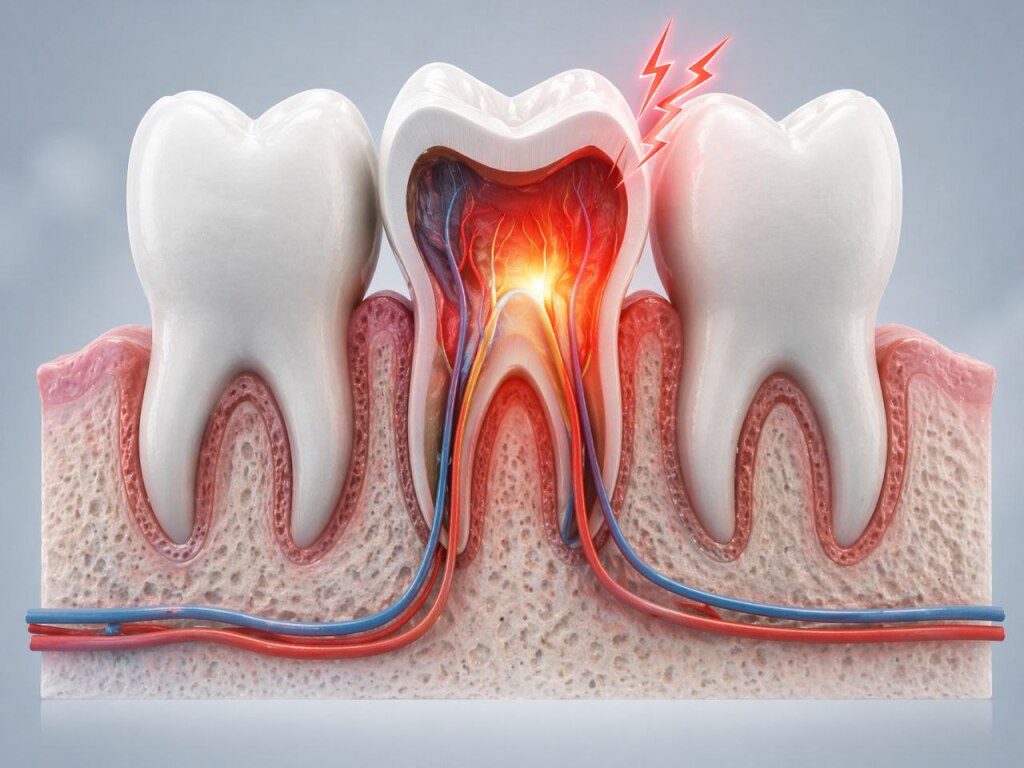
Tooth Nerve Pain (Pulpitis): Causes, Symptoms, Treatment, and When to See a Dentist
Tooth nerve pain refers to pain originating from the inner part of the tooth, known as the pulp.
This condition is medically called pulpitis, which is the inflammation of the dental pulp containing nerves and blood vessels.
Tooth nerve pain can range from mild sensitivity to severe, persistent pain and often indicates underlying tooth damage or infection.
Understanding Pulpitis
Pulpitis occurs when the pulp becomes inflamed due to irritation or bacterial invasion.
There are two main types:
🔸Reversible Pulpitis
- Mild inflammation
- Pain triggered by cold or sweets
- Short-lasting discomfort
- Tooth can be saved with proper treatment
🔸Irreversible Pulpitis
- Severe inflammation
- Spontaneous or lingering pain
- Pain may worsen at night
- Usually requires root canal treatment
👉 This distinction is critical for determining treatment.
Causes of Tooth Nerve Pain
The most common causes involve damage that allows bacteria to reach the pulp.
🔸Tooth Decay (Cavities): Untreated decay is the leading cause of pulp inflammation.
🔸Cracked or Fractured Teeth: Cracks can expose the inner tooth structure, allowing bacteria to enter.
🔸Repeated Dental Procedures: Multiple restorations can irritate the pulp over time.
🔸Trauma: Injury to a tooth may damage the pulp even without visible cracks.
Symptoms
Symptoms vary depending on severity but may include:
- Sharp or throbbing tooth pain
- Sensitivity to hot or cold
- Pain when biting or chewing
- Lingering pain after stimulus removal
- Spontaneous pain without a trigger
👉 Severe, persistent pain often indicates irreversible pulpitis.
Tooth Nerve Pain vs Tooth Abscess
Although related, these conditions are different:
- Tooth nerve pain (pulpitis) = inflammation
- Tooth abscess = advanced infection with pus formation
👉 Untreated pulpitis can progress into a tooth abscess.
When Is Tooth Nerve Pain an Emergency?
Seek immediate care if you experience:
- Severe, persistent pain
- Swelling of the face or gums
- Fever
- Difficulty chewing or sleeping due to pain
👉 These may indicate advanced infection or complications.
Diagnosis
Diagnosis involves:
- Clinical examination
- Sensitivity tests (cold, heat)
- Dental X-rays
These help determine whether the pulp is still viable or irreversibly damaged.
Treatment Options
Treatment depends on whether the pulpitis is reversible or irreversible.
🔹For Reversible Pulpitis
- Removal of decay
- Placement of a filling
- Elimination of irritants
👉 The tooth can recover if treated early.
🔹For Irreversible Pulpitis
- Root canal treatment to remove infected pulp
- Restoration with a Dental crown
👉 This preserves the tooth while eliminating pain.
🔹Tooth Extraction
If the tooth cannot be saved, tooth extraction may be necessary
Can Tooth Nerve Pain Go Away on Its Own?
Temporary relief may occur, but the underlying problem remains.
Pain disappearing can sometimes indicate nerve death, not healing.
Pain Management (Short-Term)
While waiting for treatment:
- Use over-the-counter pain relievers
- Avoid hot, cold, or sweet foods
- Maintain oral hygiene
👉 These measures do NOT replace professional care.
Prevention
To reduce the risk of pulpitis:
- Brush and floss regularly
- Treat cavities early
- Avoid delaying dental visits
- Use protective gear during sports
Clinical Insight
Pulpitis represents a progressive inflammatory process.
Early-stage inflammation is reversible, but once the pulp becomes necrotic, intervention is required.
👉 Timing is critical; early treatment can save the tooth.
Conclusion
Tooth nerve pain (pulpitis) is a common but significant dental condition that signals inflammation or damage within the tooth.
While early stages are reversible, advanced cases require procedures such as root canal treatment to prevent complications.
Prompt diagnosis and treatment are essential to relieve pain and preserve oral health.
Frequently Asked Questions
What does tooth nerve pain feel like?
It can range from mild sensitivity to severe, throbbing pain.
Is pulpitis reversible?
Yes, in early stages. Advanced cases are not reversible.
Does tooth nerve pain mean I need a root canal?
Not always, but persistent or severe pain often requires it.
Can a tooth nerve heal itself?
Only in cases of reversible pulpitis.
How quickly should I see a dentist?
As soon as possible, especially if pain is severe or persistent.
References
Hargreaves, K. M., & Berman, L. H. (2016). Cohen’s pathways of the pulp. Elsevier.
Siqueira, J. F., & Rôças, I. N. (2009). Microbiology of apical periodontitis. Journal of Endodontics.
American Association of Endodontists (AAE). Endodontic diagnosis guidelines.