
Cold Sores: Causes, Symptoms, Treatment & How to Prevent Outbreaks
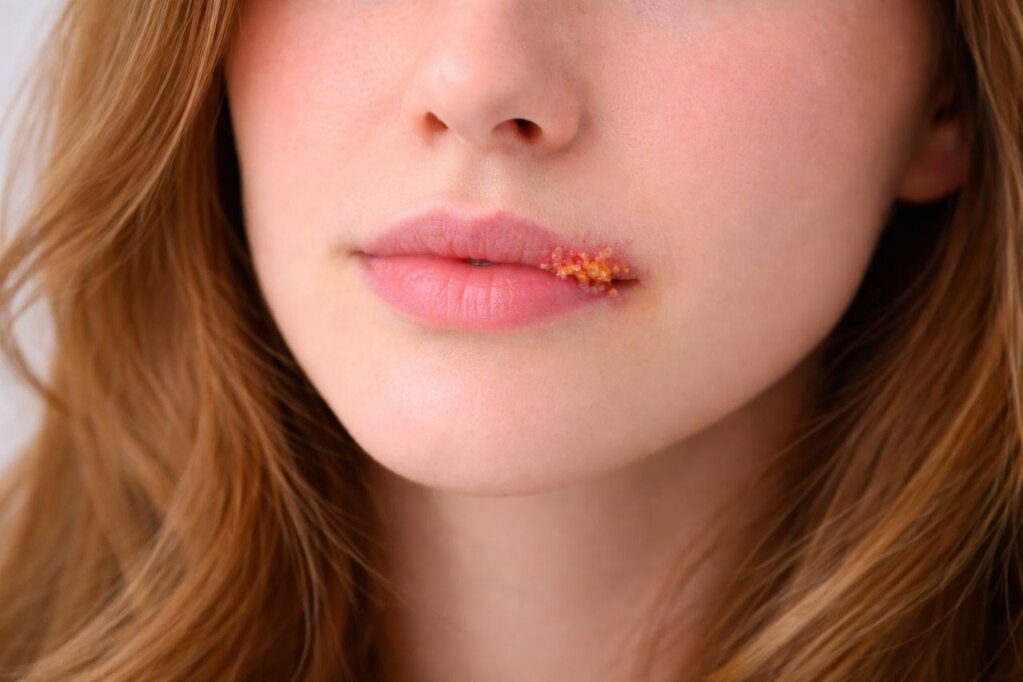
Cold sores are small, fluid-filled blisters that typically appear on or around the lips.
They are caused by a viral infection and are highly contagious, often recurring throughout life once a person is infected.
👉 Unlike canker sores, cold sores are caused by a virus, and they behave very differently.
What Are Cold Sores?
Cold sores, also known as herpes labialis, are lesions caused by the Herpes simplex virus type 1.
They usually appear on:
- The lips
- Around the mouth
- Occasionally, on the nose or chin
Once infected, the virus remains in the body in a dormant state and can reactivate periodically.
What Causes Cold Sores?
Cold sores are caused by infection with HSV-1.
The virus spreads through:
- Direct skin-to-skin contact
- Kissing
- Sharing utensils, lip balm, or towels
What Triggers Cold Sore Outbreaks
After the initial infection, certain factors can reactivate the virus:
- Stress
- Illness or fever
- Sun exposure
- Hormonal changes
- Fatigue
👉 These triggers vary from person to person.
Stages of a Cold Sore
Cold sores typically follow a predictable progression.
🔸Stage 1: Tingling and Itching
- Burning or tingling sensation
- Occurs 1–2 days before visible sores
🔸Stage 2: Blister Formation
- Small fluid-filled blisters appear
- Often clustered together
🔸Stage 3: Ulceration
- Blisters rupture
- Leave shallow, painful, open sores
🔸Stage 4: Crusting
- Sores dry out and form a scab
🔸Stage 5: Healing
- Scab falls off
- Skin heals completely
👉 The full cycle usually lasts 7–10 days.
Symptoms of Cold Sores
Symptoms can vary depending on whether it’s a first infection or a recurrence.
🔹Common Symptoms
- Painful blisters on the lips
- Burning or itching sensation
- Crusting and scabbing
🔹First-Time Infection Symptoms
The initial infection may be more severe and include:
- Fever
- Swollen lymph nodes
- Sore throat
- General fatigue
Are Cold Sores Contagious?
Yes, highly contagious. They are most contagious when:
- Blisters are present
- Fluid is leaking
- The sore is open
How to Prevent Spreading
- Avoid kissing
- Do not share personal items
- Wash your hands frequently
- Avoid touching the sore
👉 Even without visible sores, transmission is still possible (though less likely).
How to Treat Cold Sores
There is no cure for the virus, but treatment can reduce symptoms and speed up healing.
🔹Antiviral Medications
Prescription antivirals such as Acyclovir or Valacyclovir can:
- Shorten outbreak duration
- Reduce severity
- Prevent future outbreaks
🔹Over-the-Counter Treatments
- Topical creams
- Pain-relieving ointments
- Lip balms with sun protection
🔹Home Care
- Apply cold compresses
- Keep the area clean
- Avoid irritating foods
How to Heal Cold Sores Faster
While you can’t eliminate the virus, you can optimize recovery:
- Start treatment early (during the tingling stage)
- Keep the area moisturized
- Avoid picking at the scab
- Protect lips from sun exposure
👉 Early intervention is the most effective strategy.
How to Prevent Cold Sores
Prevention focuses on minimizing triggers and reducing exposure.
Key Strategies:
- Use sunscreen on lips
- Manage stress
- Maintain a strong immune system
- Avoid close contact during outbreaks
Cold Sores vs Canker Sores
These are often confused, but they are completely different.
Feature | Cold Sores | Canker Sores |
Cause | Virus (HSV-1) | Non-viral |
Location | Outside mouth | Inside mouth |
Contagious | Yes | No |
Appearance | Blisters | Ulcers |
👉 This distinction is clinically important.
When to See a Doctor
Seek medical attention if:
- Sores are severe or frequent
- Healing takes longer than 2 weeks
- Pain is intense
- You have a weakened immune system
Can Cold Sores Be Cured?
No. Once infected with HSV-1, the virus remains in the body for life.
However:
- Outbreaks can be controlled
- Frequency can decrease over time
Conclusion
Cold sores are a common viral condition with recurring episodes.
Key takeaways:
- Caused by HSV-1 and is highly contagious
- Follow a predictable healing cycle
- Can be managed effectively with early treatment
👉 Understanding triggers and acting early can significantly reduce their impact.
Frequently Asked Questions
What causes cold sores to flare up?
Stress, illness, sun exposure, and hormonal changes are common triggers.
How long do cold sores last?
Typically 7–10 days.
Are cold sores contagious?
Yes, especially during active outbreaks.
Can I prevent cold sores completely?
Not entirely, but triggers can be managed to reduce frequency.
What is the fastest way to heal a cold sore?
Start antiviral treatment early and avoid irritation.
References
Arduino, P. G., & Porter, S. R. (2008). Herpes simplex virus type 1 infection: Overview on relevant clinico-pathological features. Journal of Oral Pathology & Medicine, 37(2), 107–121.
Spruance, S. L., et al. (2002). The natural history of recurrent herpes simplex labialis: Implications for antiviral therapy. New England Journal of Medicine, 346(8), 596–602.