
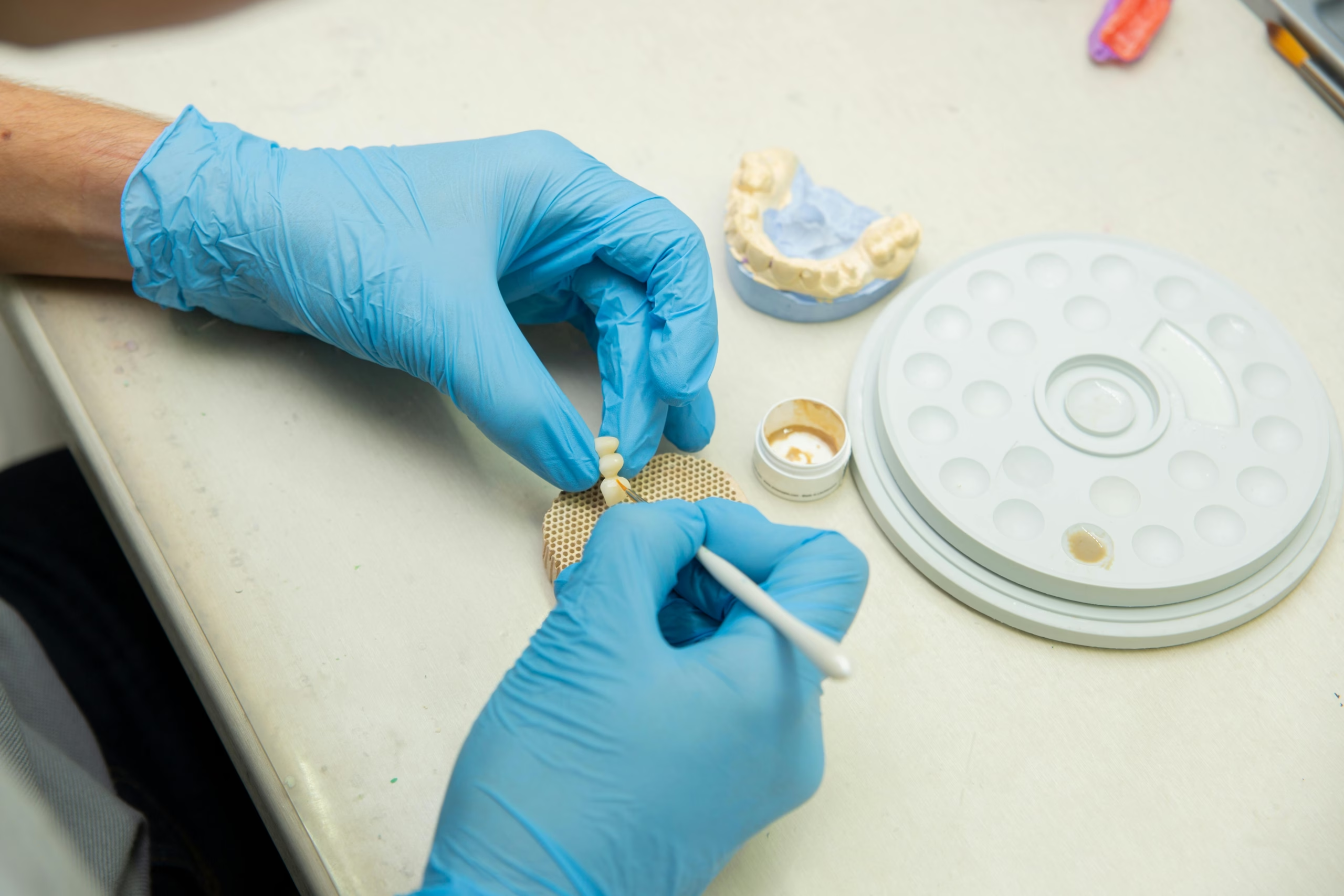
Dental Bridge: Types, Cost, Procedure & Pros and Cons
A dental bridge is a fixed dental prosthesis used to replace one or more missing teeth by anchoring an artificial tooth to adjacent natural teeth or implants.
It “bridges” the gap left by missing teeth, restoring both function and aesthetics.
It’s one of the most common fixed solutions for tooth replacement.
What Is a Dental Bridge?
A Dental bridge consists of one or more artificial teeth (pontics) supported by neighboring teeth or dental implants.
The supporting teeth are typically covered with crowns to hold the bridge securely in place.
This creates a stable, non-removable restoration.
Types of Dental Bridges
Different types of bridges are used depending on the clinical situation.
🔹Traditional Dental Bridge
This is the most common type.
It uses crowns on adjacent natural teeth to support the artificial tooth.
🔹Cantilever Bridge
Used when only one adjacent tooth is available for support.
It is less common due to increased stress on the supporting tooth.
🔹Maryland Bridge
This type uses a metal or ceramic framework bonded to the back of adjacent teeth.
It is more conservative but less durable than traditional bridges.
🔹Implant-Supported Bridge
Instead of natural teeth, this bridge is supported by dental implants.
It provides greater stability and does not rely on surrounding teeth.
👉 This is the most advanced type of dental bridge.
Who is a Candidate?
Dental bridges are ideal for patients who:
- Have one or more missing teeth
- Have healthy adjacent teeth for support
- Want a fixed (non-removable) solution
- Are not candidates for implants (in some cases)
The Procedure Step by Step
The process usually requires multiple visits:
- First, the supporting teeth are prepared by reshaping them to fit crowns.
- Impressions are taken to create a custom bridge.
- A temporary bridge may be placed while the final one is fabricated.
- Once ready, the permanent bridge is cemented into place.
👉 Precision is essential for proper fit and function.
Recovery and Adjustment
Recovery is generally quick, with mild sensitivity or discomfort after placement.
Patients may need a short adjustment period to get used to the new restoration.
Normal function typically returns quickly.
Cost of Dental Bridges
In the United States, dental bridge costs typically range from:
- $2,000 – $5,000+ (traditional bridges)
- $4,000 – $15,000+ (implant-supported bridges)
Costs vary based on materials, number of teeth replaced, and complexity.
👉 Implant-supported bridges are more expensive but offer better long-term outcomes.
Benefits of Dental Bridges
Dental bridges offer several important advantages:
- They restore chewing ability and improve speech.
- They maintain facial structure and prevent teeth from shifting.
- They provide a fixed, stable solution without removal.
- They are less invasive than some implant procedures.
- Function and aesthetics are restored quickly.
Drawbacks of Dental Bridges
Despite their benefits, bridges have limitations:
- They require preparation of healthy adjacent teeth.
- They do not prevent bone loss in the missing tooth area.
- They may need replacement over time due to wear or damage.
- Long-term durability depends on proper care.
Dental Bridge vs Dental Implants
Dental bridges rely on adjacent teeth for support, while dental implants are anchored in the jawbone.
Implants preserve bone and do not affect neighboring teeth.
Bridges are generally faster and less invasive but may compromise adjacent teeth.
👉 Implants are often the preferred long-term solution when possible.
Dental Bridge vs Dentures
Dentures are removable, while bridges are fixed in place.
Bridges offer greater stability and comfort.
Dentures are more affordable and suitable for replacing multiple teeth.
How Long Do Dental Bridges Last?
Dental bridges typically last 10 to 15 years with proper care.
Longevity depends on oral hygiene, materials, and overall dental health.
Daily Care and Maintenance
Maintaining a dental bridge requires good oral hygiene.
- Brushing and flossing are essential, especially around the supporting teeth.
- Special tools may be needed to clean under the bridge.
- Regular dental visits help ensure long-term success.
Clinical Insight
Dental bridges remain a reliable solution, especially when implants are not feasible.
However, preserving natural tooth structure should always be carefully considered.
When to See a Dentist
You should consider a dental bridge if:
- You have one or more missing teeth
- You want a fixed restoration
- You are evaluating alternatives to implants
Early treatment helps prevent complications such as tooth shifting and bite problems.
Conclusion
A dental bridge is a proven and effective solution for replacing missing teeth, offering both functional and aesthetic benefits.
While not as advanced as implant-based solutions, it remains a valuable option in many cases.
The key points are clear:
- It replaces missing teeth using adjacent support
- It provides a fixed, non-removable solution
- It is a practical alternative to implants in certain situations
👉 Choosing the right treatment depends on individual needs and long-term goals.
Frequently Asked Questions
Is a dental bridge permanent?
It is fixed in place but may need replacement over time.
Does getting a bridge hurt?
The procedure is performed under anesthesia, with minimal discomfort.
Can a dental bridge be removed?
Only by a dentist, it is not removable by the patient.
Are bridges better than implants?
Implants are generally more durable, but bridges are less invasive and faster.
How do I clean under a bridge?
Special floss or interdental tools are recommended.
References
Shillingburg, H. T., Hobo, S., Whitsett, L. D., et al. (2012). Fundamentals of fixed prosthodontics (4th ed.). Quintessence Publishing.
Misch, C. E. (2008). Contemporary implant dentistry (3rd ed.). Mosby Elsevier.
Rosenstiel, S. F., Land, M. F., Fujimoto, J. (2015). Contemporary fixed prosthodontics (5th ed.). Elsevier.