
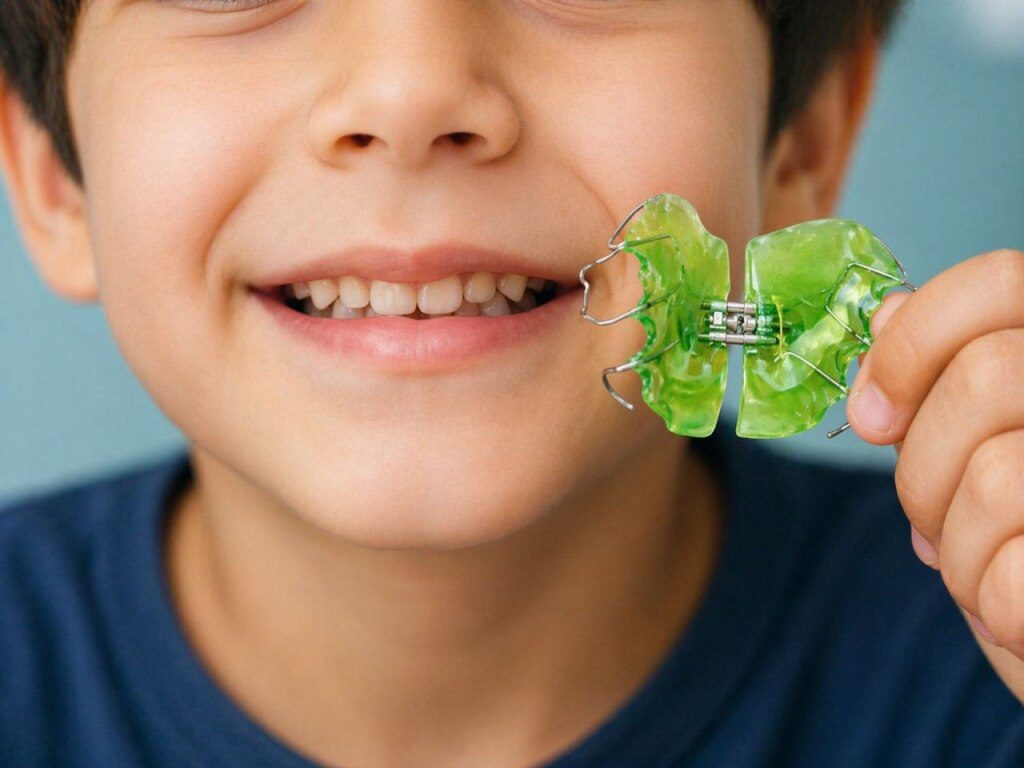
Palatal Expanders: Purpose, Types, Benefits, and Treatment Process
Palatal expanders are orthodontic devices used to widen the upper jaw (maxilla).
They are commonly used in children and adolescents to correct jaw alignment problems and create more space for teeth to grow properly.
When the upper jaw is too narrow, it can lead to several dental issues, including crowding, crossbites, and breathing difficulties.
Palatal expanders gradually widen the palate by applying gentle pressure to the upper jaw over time.
This orthodontic treatment can significantly improve dental alignment and may reduce the need for more complex procedures later in life.
What Is a Palatal Expander?
A palatal expander is a dental appliance placed on the roof of the mouth that gradually widens the upper jaw.
The device works by applying gentle pressure to the palatal bones, encouraging them to separate slightly at the midline.
This separation allows new bone to form in the gap, permanently increasing the width of the upper jaw.
Because the bones of the palate are still developing during childhood, this treatment is most effective in younger patients.
Orthodontists often recommend palatal expanders as part of early orthodontic treatment.
Why Palatal Expanders Are Used
Orthodontists use palatal expanders to treat several structural and orthodontic problems.
Common reasons for using this device include:
- A narrow upper jaw
- Crowded teeth
- Crossbite (when upper teeth fit inside lower teeth)
- Insufficient space for erupting teeth
- Breathing issues related to a narrow palate
- Preparation for braces or other orthodontic treatments
Expanding the palate early can improve both dental alignment and facial development.
How Palatal Expanders Work
The upper jaw consists of two bones joined at the midpalatal suture, a natural seam that gradually fuses with age.
Palatal expanders apply controlled pressure to this suture.
The treatment process typically involves:
- The orthodontist attaches the expander to the upper molars.
- A small screw in the center of the appliance is periodically activated.
- Each activation slightly widens the device.
- The palatal bones gradually separate, and new bone forms in the space.
This process is known as rapid palatal expansion.
Types of Palatal Expanders
There are several types of palatal expanders used in orthodontics.
🔹Rapid Palatal Expander (RPE)
The rapid palatal expander is the most common type.
It includes a small expansion screw in the center that is turned using a special key. Each turn slightly widens the device.
This type of expander can widen the upper jaw within a few weeks.
🔹Removable Palatal Expander
Some expanders are removable appliances that can be taken out for cleaning.
However, they require consistent patient cooperation and are generally less commonly used for significant expansion.
🔹Implant-Supported Expander
In older adolescents and adults, orthodontists may use implant-supported expanders that anchor directly to the bone using small temporary implants.
These devices help achieve expansion when the palatal suture has already begun to fuse.
What Age Is Best for Palatal Expansion?
Palatal expansion is most effective during childhood or early adolescence, before the palatal bones fuse.
Orthodontists often recommend treatment between the ages of 7 and 14.
During this period, the bones are still flexible and respond well to expansion forces.
In adults, expansion may require surgical assistance.
What to Expect During Treatment
The palatal expander is typically worn for several months.
🔹Activation Phase
During the first phase of treatment, the expansion screw is turned regularly according to the orthodontist’s instructions.
This phase usually lasts 2–4 weeks.
Patients may feel mild pressure or tightness in the upper jaw after activation.
🔹Retention Phase
Once the desired expansion is achieved, the expander remains in place for several months.
This allows the new bone to stabilize and maintain the widened palate.
Possible Side Effects
Most patients adapt quickly to palatal expanders, but some temporary side effects may occur.
Common effects include:
- Mild pressure or discomfort after adjustments
- Temporary speech changes
- Increased saliva production
- A small gap developing between the front teeth
The gap between the front teeth is normal and usually closes naturally during orthodontic treatment.
Benefits of Palatal Expansion
Palatal expanders offer several important orthodontic benefits.
These include:
- Creating more space for crowded teeth
- Correcting crossbites
- Improving bite alignment
- Supporting proper facial development
- Potentially improving nasal airflow and breathing
Early orthodontic treatment using expanders can reduce the need for tooth extractions or complex orthodontic procedures later.
Conclusion
Palatal expanders are effective orthodontic devices used to widen the upper jaw and correct structural dental problems.
By gradually expanding the palate during childhood or adolescence, orthodontists can create space for proper tooth alignment and improve bite function.
Although the treatment may require several months, palatal expansion can play an important role in guiding healthy dental and facial development.
Frequently Asked Questions
Do palatal expanders hurt?
Most patients feel mild pressure rather than pain, especially after the expander is adjusted. The sensation usually disappears within a few minutes.
How long do palatal expanders stay in the mouth?
Palatal expanders are typically worn for 3 to 6 months, depending on the amount of expansion needed.
Can adults use palatal expanders?
Adults may require specialized expanders or surgical assistance because the palatal bones have already fused.
Do palatal expanders change facial appearance?
Yes, they can slightly widen the upper jaw and improve facial balance, especially when used during childhood.
Will a gap appear between the front teeth?
Yes. A temporary gap between the upper front teeth is common during expansion and usually closes during orthodontic treatment.
References
Proffit, W. R., Fields, H. W., Larson, B., & Sarver, D. M. (2018). Contemporary orthodontics (6th ed.). Elsevier.
Lagravère, M. O., Carey, J., Heo, G., Toogood, R. W., & Major, P. W. (2010). Transverse dental arch dimension changes after rapid maxillary expansion. American Journal of Orthodontics and Dentofacial Orthopedics, 138(1), 71–78.
McNamara, J. A. (2000). Maxillary transverse deficiency. American Journal of Orthodontics and Dentofacial Orthopedics, 117(5), 567–570.