
Dental Crown: Cost, Types, Procedure & How Long It Lasts
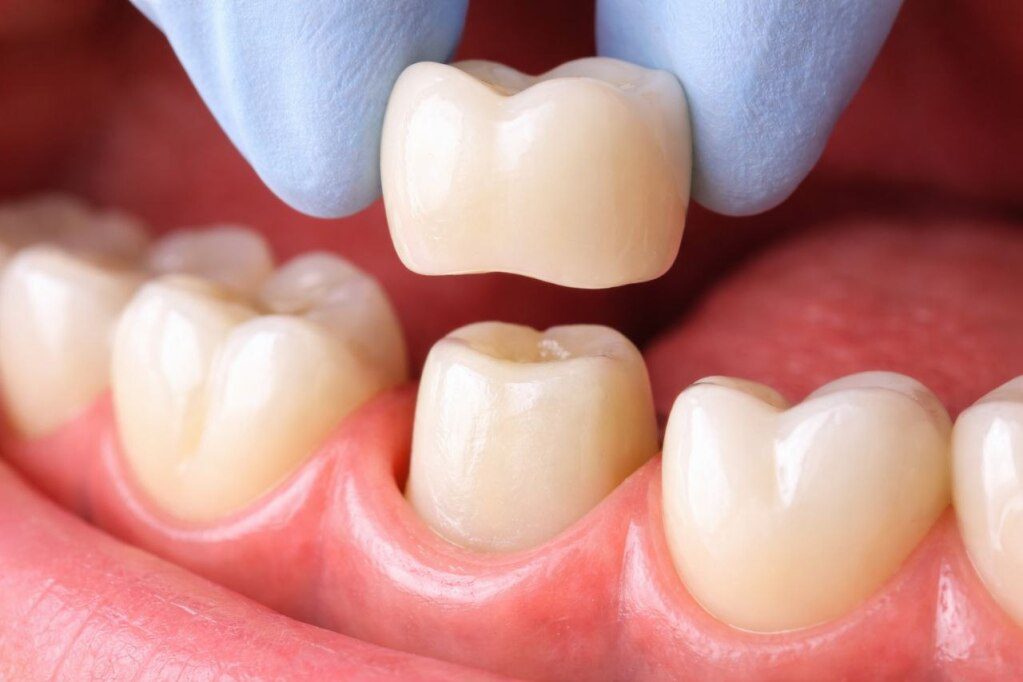
A dental crown is a custom-made cap placed over a damaged or weakened tooth to restore its shape, strength, and appearance.
It is one of the most common and effective treatments in restorative dentistry.
Think of it as a protective shell that brings a tooth back to life.
What Is a Dental Crown?
A dental crown fully covers the visible portion of a tooth above the gum line.
It is designed to restore function, protect the tooth, and improve aesthetics.
Crowns are often used when a tooth is too damaged for a filling but not lost entirely.
When Do You Need a Dental Crown?
A crown may be recommended in several situations:
- Severely decayed teeth
- Cracked or fractured teeth
- After root canal treatment
- To restore worn-down teeth
- To support a dental bridge
- To cover dental implants
It’s a structural solution, not just cosmetic.
Types of Dental Crowns
Different materials are used depending on function and aesthetics.
🔹Porcelain Crowns
Highly aesthetic and designed to match natural tooth color.
Often used for front teeth.
🔹Ceramic Crowns
Similar to porcelain but often stronger and more durable.
Provide excellent aesthetics.
🔹Metal Crowns
Made from gold or other alloys.
Extremely durable but less aesthetic.
🔹Porcelain-Fused-to-Metal (PFM) Crowns
Combine strength (metal) with aesthetics (porcelain).
A balance between durability and appearance.
🔹Zirconia Crowns
Strong, durable, and highly aesthetic.
One of the most advanced crown materials available today.
Dental Crown Procedure
The process usually requires two visits:
- First, the tooth is prepared by removing damaged areas and reshaping it.
- An impression is taken to create a custom crown.
- A temporary crown is placed while the permanent one is fabricated.
- At the second visit, the final crown is cemented into place.
👉 Precision is critical for fit and function.
How Long Do Dental Crowns Last?
Dental crowns typically last 10 to 15 years, but can last longer with proper care.
Longevity depends on materials, oral hygiene, and habits such as grinding.
Cost of Dental Crowns
In the United States, dental crowns typically cost:
- $800 – $2,500 per tooth
Costs vary depending on material, location, and provider expertise.
👉 Zirconia and porcelain crowns tend to be more expensive.
Benefits of Dental Crowns
Dental crowns provide several important benefits:
- They restore strength and function to damaged teeth.
- They improve appearance and aesthetics.
- They protect teeth from further damage.
- They can support other dental treatments.
Drawbacks
Despite their effectiveness, crowns have some limitations:
- They require removal of natural tooth structure.
- They can be expensive depending on material.
- They may need replacement over time.
👉 It’s a permanent modification of the tooth.
Dental Crown vs Filling
Dental fillings are used for minor damage.
Crowns are used when the tooth is too weak for a filling.
Crowns provide full coverage and protection.
Dental Crown vs Veneers
Veneers cover only the front surface of the tooth.
Crowns cover the entire tooth.
Crowns are more suitable for structural damage, while dental veneers are merely cosmetic.
Dental Crown vs Dental Bridge
Crowns restore a single tooth, while dental bridges replace missing teeth.
Crowns can also support bridges by acting as anchors.
Dental Crown vs Dental Implants
Crowns restore existing teeth, while dental implants replace missing teeth.
In implant treatments, a crown is placed on top of the implant.
👉 Crowns are often part of implant restorations.
Daily Care and Maintenance
Proper care is essential for long-term success:
- Brush and floss regularly, especially around the crown margins.
- Avoid biting hard objects that could damage the crown.
- Regular dental check-ups help ensure proper fit and function.
Clinical Insight
Dental crowns are a cornerstone of restorative dentistry due to their versatility and durability.
Long-term success depends on proper tooth preparation, material selection, and oral hygiene.
When to See a Dentist
You should consider a dental crown if:
- You have a damaged or weakened tooth
- You have had a root canal treatment
- You want to restore both function and aesthetics
Early treatment helps preserve the remaining tooth structure.
Conclusion
A dental crown is a highly effective solution for restoring damaged teeth, providing both strength and aesthetic improvement.
It plays a crucial role in modern restorative dentistry.
The key points are clear:
- It covers and protects damaged teeth
- It restores function and appearance
- It is used in many dental treatments
👉 With proper care, it can provide long-lasting results.
Frequently Asked Questions
Does getting a crown hurt?
The procedure is performed under anesthesia, so discomfort is minimal.
How long do crowns last?
Typically 10 to 15 years or more.
Can a crown fall off?
It is rare but possible; a dentist can usually reattach it.
Are crowns better than fillings?
For large damage, yes, they provide more protection.
Can crowns look natural?
Yes, especially porcelain and zirconia crowns.
References
Shillingburg, H. T., Hobo, S., Whitsett, L. D., et al. (2012). Fundamentals of fixed prosthodontics (4th ed.). Quintessence Publishing.
Rosenstiel, S. F., Land, M. F., Fujimoto, J. (2015). Contemporary fixed prosthodontics (5th ed.). Elsevier.
Misch, C. E. (2008). Contemporary implant dentistry (3rd ed.). Mosby Elsevier.