
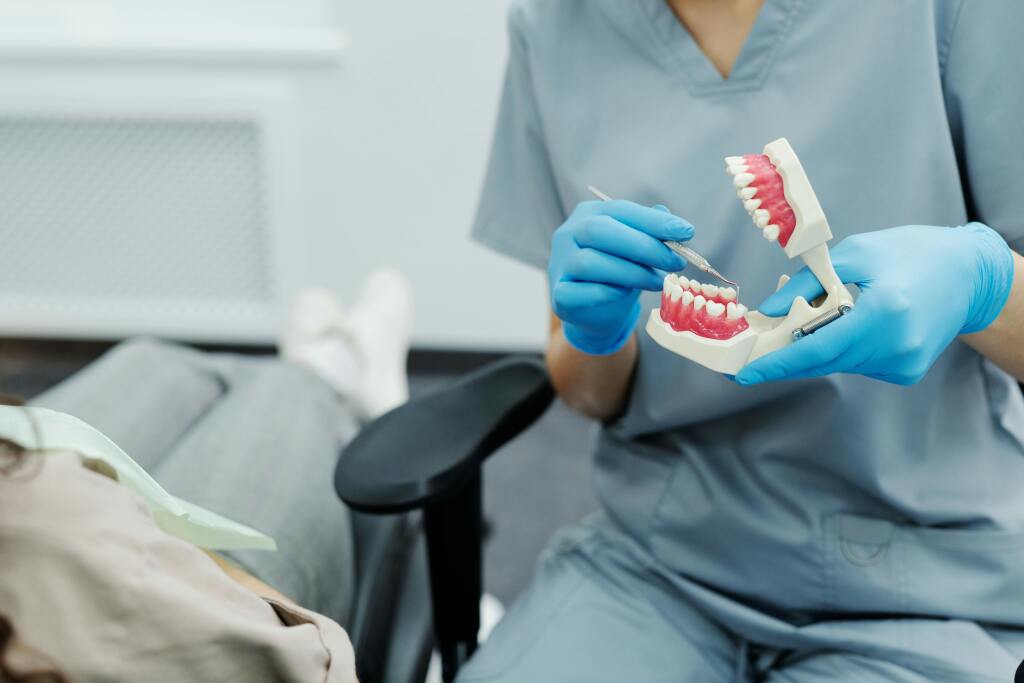
Dentures: Types, Cost, Pros and Cons & What to Expect
Dentures are removable dental prosthetic devices used to replace missing teeth and surrounding tissues.
They remain one of the most common and accessible solutions for patients who have lost multiple or all teeth.
While modern dentistry offers advanced alternatives, dentures continue to play a key role due to their affordability and simplicity.
What Are Dentures?
Dentures are custom-made appliances designed to restore oral function and appearance after tooth loss.
They are typically made from acrylic, resin, or a combination of materials that mimic natural teeth and gums.
Dentures can replace a few missing teeth or an entire arch.
Types of Dentures
Different types of dentures are available depending on the patient’s needs.
🔹Full Dentures
Full dentures replace all teeth in the upper jaw, lower jaw, or both.
They rest directly on the gums and rely on suction or adhesives for stability.
🔹Partial Dentures
Partial dentures are used when some natural teeth remain.
They attach to existing teeth using clasps or connectors.
🔹Immediate Dentures
These are placed immediately after tooth extraction.
They allow patients to have teeth during the healing process, though adjustments are often needed later.
🔹Implant-Supported Dentures
Unlike traditional dentures, these are anchored to implants for improved stability.
They can be removable or fixed and are often part of advanced treatments like All-on-4 implants.
👉 This is a major upgrade from conventional dentures.
Who Needs Dentures?
Dentures are recommended for patients who:
- Have lost multiple or all teeth
- Cannot undergo implant surgery
- Are looking for a more affordable solution
- Need a temporary restoration
They are often used as a starting point before transitioning to implant-based solutions.
Benefits of Dentures
Dentures provide several advantages:
- They restore the ability to chew and speak more effectively.
- They improve facial appearance by supporting the lips and cheeks.
- They are more affordable compared to implant treatments.
- They are non-invasive and do not require surgery.
👉 Accessibility is their biggest advantage.
Drawbacks of Dentures
Despite their benefits, dentures have limitations:
- They may feel unstable or move during eating and speaking.
- They can cause discomfort or irritation if not properly fitted.
- They do not prevent bone loss in the jaw over time.
- They require regular adjustments and maintenance.
👉 Stability is their biggest weakness.
Cost of Dentures
In the United States, denture costs typically range from:
- $1,000 – $3,000+ for full dentures
- $500 – $2,000 for partial dentures
Costs vary based on materials, customization, and provider expertise. Dentures are one of the most budget-friendly tooth replacement options.
Dentures vs Dental Implants
Dentures rest on the gums, while dental implants are anchored in the jawbone.
Implants provide superior stability and help preserve bone structure.
Dentures are more affordable but may compromise comfort and function over time.
The choice depends on budget, health, and long-term goals.
Dentures vs Implant-Supported Dentures
Traditional dentures rely on suction or adhesives.
Implant-supported dentures use implants for better retention and stability.
This significantly improves comfort and chewing efficiency.
👉 Implant-supported options are often preferred when possible.
How Long Do Dentures Last?
Dentures typically last 5 to 10 years.
Over time, they may need adjustment or replacement due to wear and changes in the jaw.
Daily Care and Maintenance
Proper care is essential for longevity and oral health:
- Dentures should be cleaned daily and removed at night.
- They should be stored properly to prevent damage or warping.
- Regular dental check-ups are necessary to ensure proper fit.
Clinical Insight
Dentures remain an important solution despite advances in implant dentistry.
However, long-term use without implants can lead to progressive bone loss and reduced stability.
When to See a Dentist
You should consider dentures if:
- You have multiple missing teeth
- You experience difficulty chewing or speaking
- You want an affordable restoration option
Regular follow-up is essential to maintain fit and function.
Conclusion
Dentures are a widely used and accessible solution for replacing missing teeth.
They provide functional and aesthetic benefits, especially for patients seeking a non-surgical option.
The key points are clear:
- Dentures are removable prosthetic devices
- They are affordable and widely available
- They can be upgraded to implant-supported options like All-on-4 implants
👉 While not perfect, they remain a practical solution for many patients.
Frequently Asked Questions
Are dentures comfortable?
They may take time to adjust, but modern dentures are more comfortable than older versions.
Can I sleep with dentures?
It is generally recommended to remove them at night.
Do dentures affect speech?
There may be a short adjustment period, but speech typically improves over time.
Are dentures better than implants?
Implants provide better stability, but dentures are more affordable.
How often should dentures be replaced?
Every 5 to 10 years, depending on wear and fit.
References
Feine, J. S., Carlsson, G. E., Awad, M. A., et al. (2002). The McGill consensus statement on overdentures. International Journal of Prosthodontics, 15(4), 413–414.
Misch, C. E. (2008). Contemporary implant dentistry (3rd ed.). Mosby Elsevier.
Zarb, G. A., Bolender, C. L. (2004). Prosthodontic treatment for edentulous patients. Mosby.