
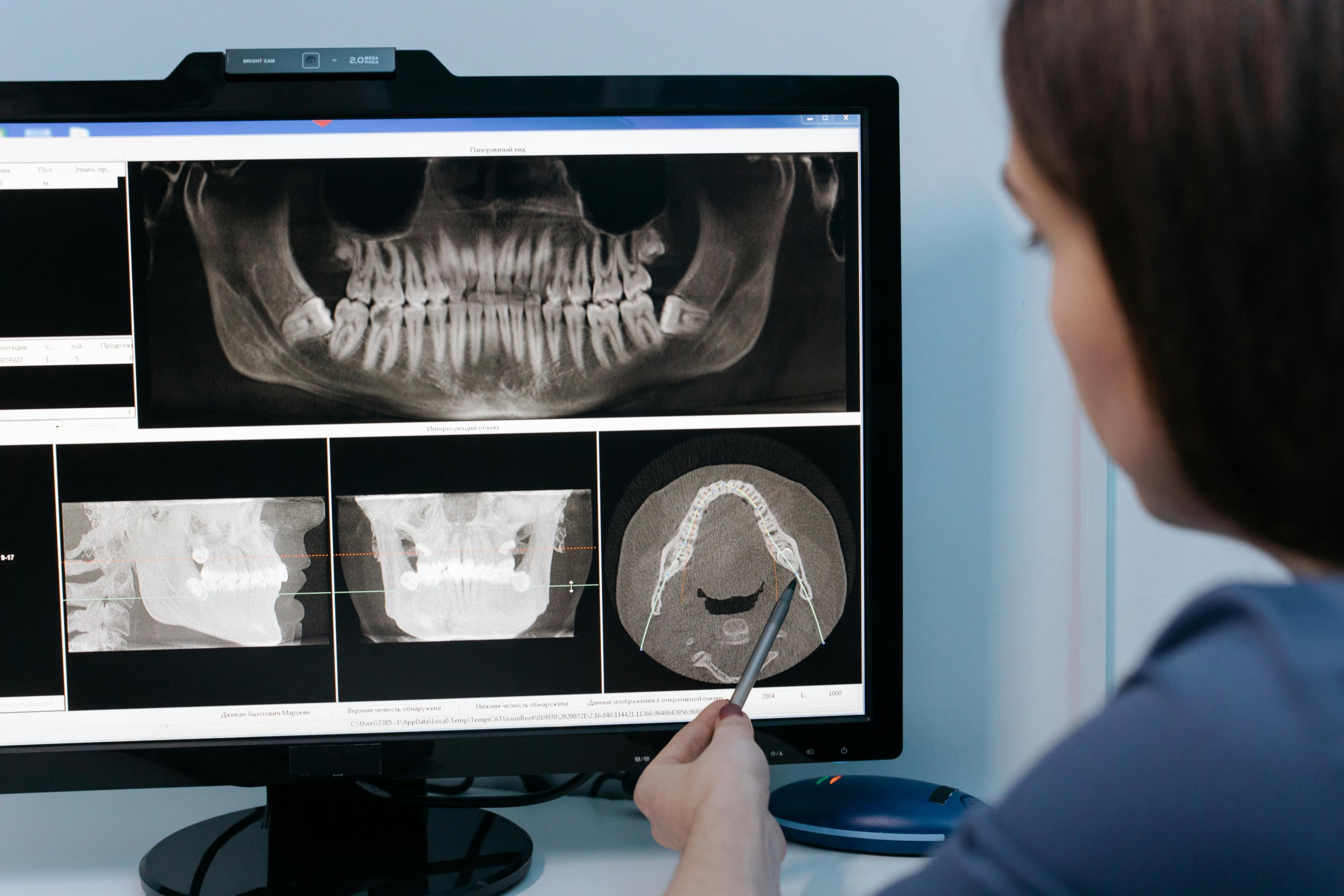
Corrective Jaw Surgery: Procedure, Cost, Recovery & Risks
Corrective jaw surgery is a procedure used to correct jaw misalignment, improving both function and facial balance.
Also known as orthognathic surgery, it is performed when the upper and lower jaws do not align properly, causing issues with chewing, speaking, breathing, or appearance.
This type of surgery goes beyond aesthetics; it addresses structural problems that cannot be corrected with orthodontics alone.
It is often recommended after braces or as part of a comprehensive orthodontic treatment plan.
What Is Corrective Jaw Surgery?
Corrective jaw surgery is a surgical procedure that repositions the upper jaw (maxilla), lower jaw (mandible), or both to achieve proper alignment.
By correcting skeletal discrepancies, the procedure restores functional bite relationships and facial harmony.
It is typically performed by an oral and maxillofacial surgeon in collaboration with an orthodontist.
Why Is Corrective Jaw Surgery Needed?
This procedure is indicated when jaw misalignment affects daily function or quality of life.
Common reasons include difficulty chewing, speech problems, chronic jaw pain, and breathing issues such as sleep apnea.
It may also be recommended when facial asymmetry or disproportion is significant.
👉 The key indication is functional impairment, not just cosmetic concern.
Common Conditions Treated
Corrective jaw surgery can address several structural problems.
🔹Underbite: Occurs when the lower jaw protrudes beyond the upper jaw, affecting both function and appearance.
🔹Overbite: Involves excessive overlap of the upper teeth over the lower teeth, which can lead to wear and jaw discomfort.
🔹Open Bite: A condition where the upper and lower teeth do not meet properly when the mouth is closed.
🔹Facial Asymmetry: Uneven jaw growth can create an imbalance in facial structure, which may require surgical correction.
Corrective Jaw Surgery vs Orthodontics
Orthodontic treatments such as braces or aligners can correct tooth alignment, but they cannot fix underlying skeletal issues.
Corrective jaw surgery addresses the bone structure, while orthodontics focuses on tooth positioning.
In many cases, both treatments are combined for optimal results.
The Procedure Step by Step
The process of corrective jaw surgery is carefully planned and executed:
- First, detailed imaging and digital planning are used to determine the exact movements required.
- During surgery, the jawbones are repositioned and secured with plates and screws.
- The procedure is performed under general anesthesia in a hospital setting.
👉 Precision planning is critical for achieving functional and aesthetic success.
Is Corrective Jaw Surgery Painful?
The surgery itself is not painful due to anesthesia.
After the procedure, patients may experience swelling, discomfort, and temporary limitations in jaw movement.
Pain is generally manageable with medication and tends to decrease over time.
Recovery and Healing Time
Recovery after corrective jaw surgery requires time and patience.
Initial swelling is most noticeable during the first few weeks.
Most patients return to normal activities within a few weeks, but full recovery can take several months.
A soft or liquid diet is typically required during the early stages of healing.
👉 Following post-operative instructions is essential for proper recovery.
Benefits of Corrective Jaw Surgery
The procedure offers both functional and aesthetic improvements:
- It can enhance chewing efficiency, improve speech, and reduce strain on the jaw joints.
- In addition, it can create better facial balance and symmetry.
- In some cases, it may also improve breathing and sleep quality.
Risks and Complications
As with any major surgery, there are potential risks:
- These may include infection, bleeding, nerve sensitivity, or temporary numbness.
- In rare cases, complications related to healing or jaw stability may occur.
👉 Proper surgical planning and follow-up care significantly reduce these risks.
Cost of Corrective Jaw Surgery
The cost can vary widely depending on the complexity of the case, location, and healthcare system:
- In the USA, the price for a corrective jaw surgery ranges from $20,000 to $50,000+.
In many cases, the procedure is partially covered by insurance if it is medically necessary.
However, when performed primarily for aesthetic reasons, coverage may be limited.
Who Is a Good Candidate?
Candidates for corrective jaw surgery are typically individuals with moderate to severe jaw misalignment that cannot be corrected with orthodontics alone.
They should be in good overall health and have realistic expectations about the outcome and recovery process.
Clinical Insight
Corrective jaw surgery demonstrates how skeletal structure directly influences oral function, airway health, and facial aesthetics.
👉 Addressing the underlying bone structure often produces results that cannot be achieved with non-surgical treatments.
When to See a Specialist
You should seek evaluation if:
- You have difficulty chewing or biting
- You experience chronic jaw pain
- You notice significant jaw misalignment or facial asymmetry
Early assessment allows for better treatment planning and outcomes.
Conclusion
Corrective jaw surgery is a comprehensive treatment designed to correct jaw misalignment and improve both function and appearance.
It plays a critical role in cases where orthodontics alone is not sufficient.
The key points are clear:
- It repositions the jaws to restore proper alignment
- It improves chewing, speech, and facial balance
- It requires careful planning and a structured recovery process
👉 When properly indicated, corrective jaw surgery can significantly improve quality of life.
Frequently Asked Questions
How long does corrective jaw surgery take?
The procedure typically lasts several hours, depending on complexity.
Will I need braces before surgery?
Sometimes, orthodontic treatment is usually part of the process but not always.
How long is recovery?
Initial recovery takes a few weeks, with full healing over several months.
Is the surgery safe?
Yes, when performed by experienced specialists.
Are the results permanent?
Yes, in most cases, results are long-lasting.
References
Peterson, L. J., Ellis, E., Hupp, J. R., & Tucker, M. R. (2012). Contemporary oral and maxillofacial surgery (6th ed.). Elsevier.
Essam Ahmed Al-Moraissi 1, Larry M Wolford 2, Daniel Perez 3, Daniel M Laskin 4, Edward Ellis 3rd (2017). Does Orthognathic Surgery Cause or Cure Temporomandibular Disorders? A Systematic Review and Meta-Analysis. Journal of Oral and Maxillofacial Surgery, 73(12), 2460–2473.