
Sinus Lift Surgery: Procedure, Cost, Recovery & Risks
Sinus lift surgery is a specialized procedure used to increase bone volume in the upper jaw, making it possible to place dental implants when there is insufficient bone height.
It involves lifting the sinus membrane and adding bone graft material to create a stable foundation for implants.
This procedure is commonly required when teeth have been missing for a long time or when natural bone is too thin to support an implant.
It is a key step in many advanced implant treatments.
What Is Sinus Lift Surgery?
Sinus lift surgery, also known as sinus augmentation, is a procedure that increases bone height in the posterior upper jaw.
The maxillary sinuses are located just above the upper molars and premolars.
When bone loss occurs in this area, there may not be enough space to securely place dental implants.
The procedure lifts the sinus membrane and fills the space with bone graft material, allowing new bone to form.
Why Is Sinus Lift Surgery Needed?
This procedure is necessary when the upper jaw lacks sufficient bone for implant placement.
Bone loss can occur due to tooth loss, periodontal disease, or natural anatomical factors such as large sinus cavities.
Without adequate bone support, dental implants cannot be placed safely or effectively.
A sinus lift creates the structural foundation needed for long-term implant success.
Sinus Lift Surgery for Dental Implants
Sinus lift surgery is often performed as a preparatory step before placing implants.
In some cases, the dental implant can be placed at the same time as the sinus lift.
In others, a healing period is required to allow the bone graft to integrate before implant placement.
This depends on the amount of existing bone and the complexity of the case.
Types of Sinus Lift Procedures
There are two main approaches to sinus lift surgery.
💠 Lateral Window Technique
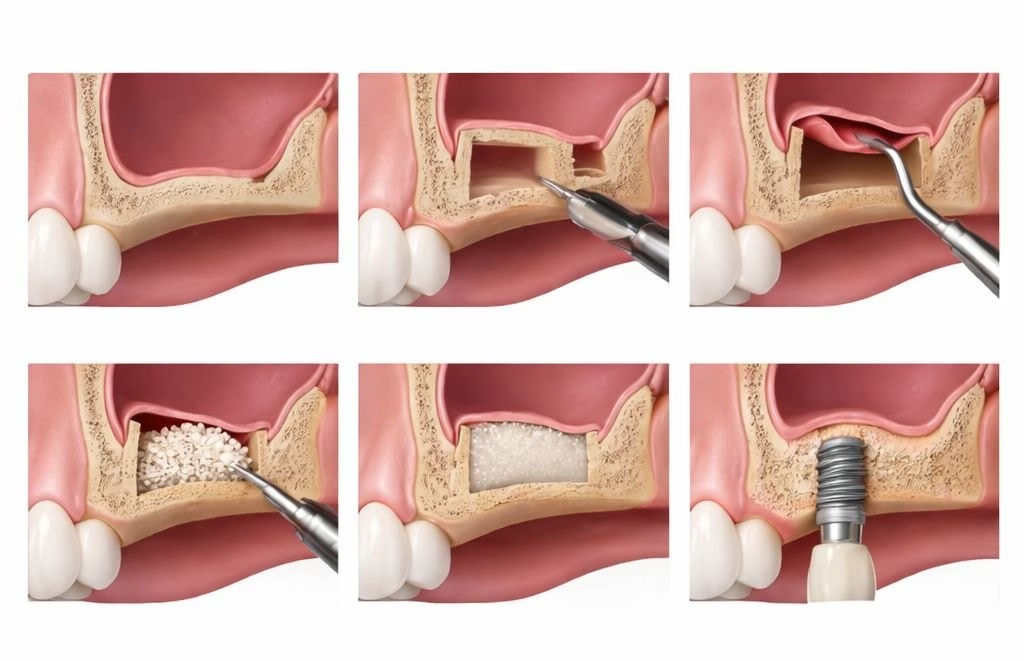
This is the most common method. A small opening is created in the side of the upper jaw to access the sinus. The membrane is gently lifted, and bone graft material is placed underneath.
💠 Osteotome (Closed) Technique
This is a less invasive approach used when only a small amount of bone augmentation is needed. The sinus is lifted through the implant site without creating a large opening.
👉 The choice of technique depends on the amount of bone required.
The Procedure Step by Step
- Sinus lift surgery is usually performed under local anesthesia, sometimes with sedation.
- The dentist or oral surgeon accesses the sinus area and carefully lifts the sinus membrane.
- Bone graft material is placed in the newly created space.
- The area is then closed, and healing begins.
👉 Precision is critical to avoid damaging the sinus membrane.
Is Sinus Lift Surgery Painful?
The procedure itself is not painful due to anesthesia.
After surgery, patients may experience mild swelling, discomfort, or pressure in the sinus area.
These symptoms are typically manageable with medication and subside within a few days.
Recovery and Healing Time
Recovery varies depending on the extent of the procedure.
Initial healing usually takes one to two weeks.
However, the bone graft requires several months, typically 4 to 9 months, to fully integrate before implants can be placed.
Patients are advised to avoid activities that increase sinus pressure, such as forceful nose blowing.
👉 Healing time is crucial for long-term implant stability.
Risks and Complications
Sinus lift surgery is generally safe, but some risks exist.
These may include sinus membrane perforation, infection, swelling, or graft failure.
In rare cases, sinus issues such as congestion or discomfort may occur.
Proper surgical technique and post-operative care significantly reduce complications.
Cost of Sinus Lift Surgery
The cost depends on the complexity of the case, the materials used, and the location.
- Basic cases: $1,500 – $3,000.
- Moderate cases: $3,000 – $5,000.
- Complex cases: $5,000 – $7,000.
Most patients fall into the $2,000 – $4,500 range. It is often considered an additional procedure on top of dental implant treatment.
Insurance coverage may vary, especially if the procedure is deemed medically necessary.
Benefits of Sinus Lift Surgery
The main benefit is enabling the placement of dental implants in areas where it would otherwise be impossible.
It improves long-term implant success by providing a stable and sufficient bone foundation.
It also helps restore function and aesthetics in patients with missing teeth.
Who Is a Good Candidate?
Candidates are individuals who require dental implants in the upper jaw but lack sufficient bone height.
They should be in good general health and free of active infections or uncontrolled systemic conditions.
A thorough evaluation, including imaging, is necessary to determine suitability.
Clinical Insight
Sinus lift surgery demonstrates the importance of bone volume and anatomical limitations in implant dentistry.
Without adequate bone support, even the most advanced implants cannot function properly.
When to See a Specialist
You should seek evaluation if:
- You have missing upper back teeth
- You are considering dental implants
- You have been told you lack sufficient bone
Early assessment allows for better planning and treatment outcomes.
Conclusion
Sinus lift surgery is a critical procedure in modern implant dentistry, allowing for successful treatment in patients with insufficient bone in the upper jaw.
It creates the necessary conditions for stable and long-lasting dental implants.
The key points are clear:
- It increases bone height in the upper jaw
- It is often required before dental implant placement
- It has a predictable and successful outcome when properly performed
👉 For many patients, it makes dental implants possible when they otherwise would not be.
Frequently Asked Questions
How long does sinus lift surgery take?
The procedure usually takes 60 to 90 minutes, depending on complexity.
Is sinus lift surgery safe?
Yes, when performed by an experienced professional.
How long before I can get implants?
Typically, 4 to 9 months, depending on healing.
Can implants be placed immediately?
In some cases, yes, if there is enough existing bone.
What happens if I don’t get a sinus lift?
Implants may not be possible or may fail due to a lack of support.
References
Boyne, P. J., & James, R. A. (1980). Grafting of the maxillary sinus floor with autogenous marrow and bone. Journal of Oral Surgery, 38(8), 613–616.
Wallace, S. S., & Froum, S. J. (2003). Effect of maxillary sinus augmentation on implant survival. Annals of Periodontology, 8(1), 328–343.
Esposito, M., Grusovin, M. G., Felice, P., & Karatzopoulos, G. (2010). Interventions for replacing missing teeth: Bone augmentation techniques. Cochrane Database of Systematic Reviews, (3), CD003607.