
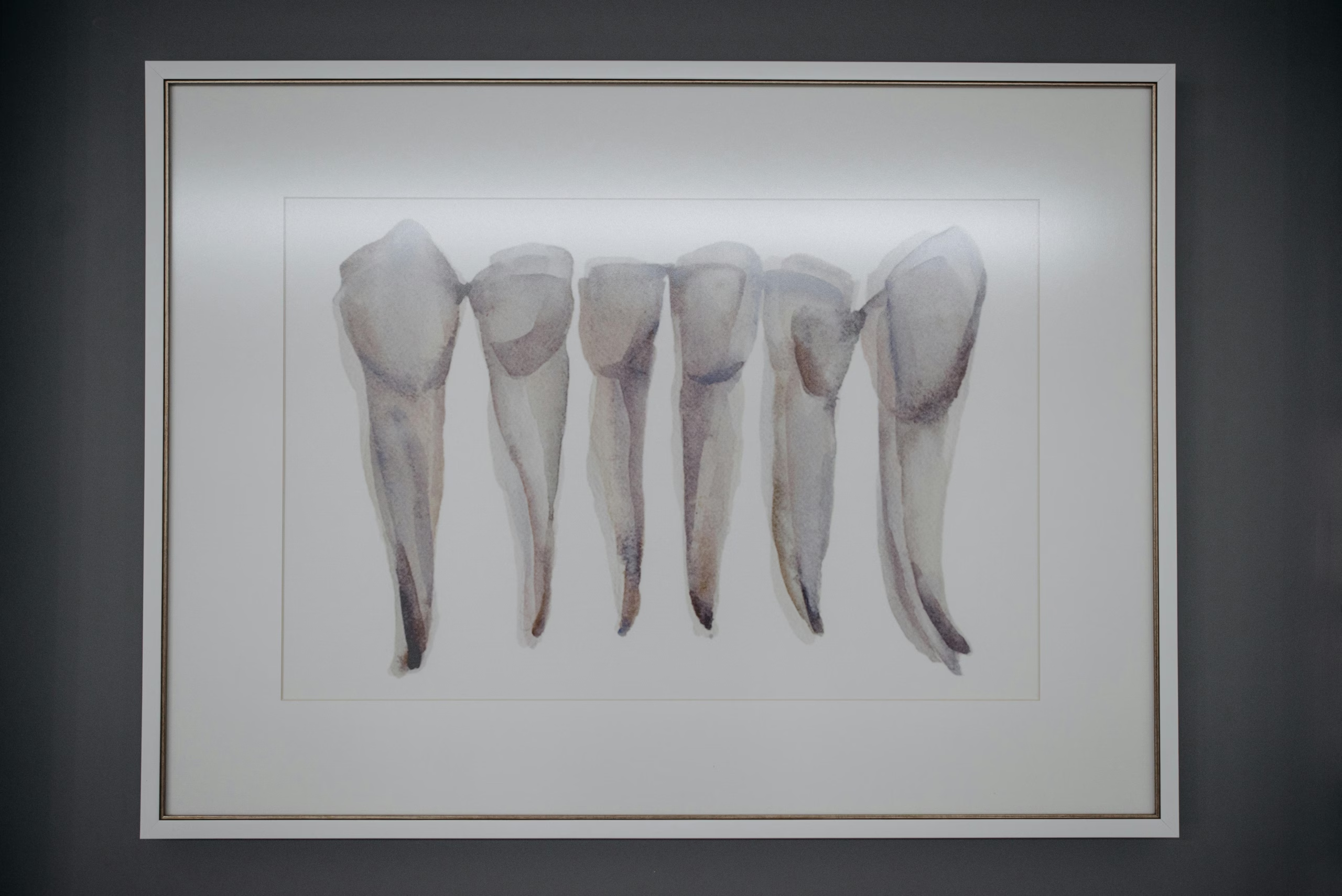
Types of Teeth: Names, Functions & Differences Explained
Understanding the types of teeth is essential for learning how your mouth functions and how to take care of it properly.
Each type of tooth has a specific shape and role, working together to help you chew, speak, and maintain facial structure.
👉 Your teeth are not all the same; each one is specialized for a different job.
What Are the Main Types of Teeth?
Humans have four main types of teeth:
- Incisors
- Canines
- Premolars
- Molars
Each type differs in:
- Shape
- Position
- Function
How Many Teeth Do Humans Have?
🔹 Adults: 32 teeth (including wisdom teeth).
🔹 Children: 20 primary (baby) teeth.
👉 Baby teeth eventually fall out and are replaced by permanent teeth.
Incisors
Incisors are the front teeth located in the upper and lower jaws.
🔹 Function:
- Cutting food
- Biting into foods like fruits
🔹 Characteristics:
- Flat and sharp edges
- Thin structure
- Highly visible when smiling
🔹 Number:
- 8 total (4 upper, 4 lower)
Canines
Canines are the pointed teeth next to the incisors.
🔹 Function:
- Tearing food
- Holding and ripping tougher textures
🔹 Characteristics:
- Sharp, pointed shape
- Long roots for stability
🔹 Number:
- 4 total (2 upper, 2 lower)
Premolars (Bicuspids)
Premolars are located between canines and molars.
🔹 Function:
- Crushing and grinding food
🔹 Characteristics:
- Flat surfaces with ridges
- Transitional shape between canines and molars
🔹 Number:
- 8 total (4 upper, 4 lower)
Molars
Molars are the largest and strongest teeth, located at the back of the mouth.
🔹 Function:
- Grinding food into small pieces
- Supporting chewing efficiency
🔹 Characteristics:
- Broad, flat surfaces
- Multiple cusps (points)
🔹 Number:
- 12 total (including wisdom teeth)
Wisdom Teeth (Third Molars)
Wisdom teeth are the last molars to develop.
🔹 Function:
- Historically used for grinding tougher diets
🔹 Modern Reality
- Often unnecessary
- Frequently impacted or removed
👉 Many people do not have enough space for them.
Differences Between the Types of Teeth
Type | Shape | Function |
Incisors | Flat | Cutting |
Canines | Pointed | Tearing |
Premolars | Ridged | Crushing |
Molars | Broad | Grinding |
👉 Each tooth type plays a specific role in digestion.
Types of Teeth in Children
Children have a simpler dental structure.
Baby Teeth Include:
- Incisors
- Canines
- Molars
👉 Premolars are not present in primary dentition.
Why Different Types of Teeth Matter
The diversity in tooth types allows for:
- Efficient chewing
- Proper digestion
- Clear speech
- Balanced bite
👉 Losing or damaging one type can affect overall function.
Common Problems Affecting Different Teeth
🔸 Incisors: Chips and fractures.
🔸 Canines: Wear from grinding.
🔸 Premolars: Cavities due to grooves.
🔸 Molars: High risk of decay due to deep pits.
How to Care for All Types of Teeth
💠 Daily Hygiene:
- Brush twice daily
- Floss daily
💠 Regular Dental Visits:
- Professional cleanings
- Early detection of problems
💠 Diet:
- Limit sugar
- Eat balanced meals
👉 Every type of tooth requires consistent care.
Evolution of Human Teeth
Human teeth have evolved due to changes in diet.
Key Changes:
- Smaller jaws
- Less need for large molars
- Increased issues with wisdom teeth
👉 Modern diets require less heavy chewing than ancestral diets.
Conclusion
The different types of teeth are essential for proper oral function and overall oral health.
Key takeaways:
- Four main types of teeth with distinct roles
- Each contributes to chewing and digestion
- Proper care is essential for all types
👉 Understanding your teeth helps you protect them more effectively.
Frequently Asked Questions
What are the four types of teeth?
Incisors, canines, premolars, and molars.
Which teeth are used for cutting food?
Incisors.
Do children have all types of teeth?
No, they do not have premolars.
Why are molars important?
They grind food for proper digestion.
Are wisdom teeth necessary?
Not always, they are often removed due to a lack of space.
References
Ash, M. M., & Nelson, S. J. (2003). Wheeler’s dental anatomy, physiology and occlusion (8th ed.). Saunders.
Ten Cate, A. R. (2013). Oral histology: Development, structure, and function (8th ed.). Mosby.
Jain Robert*. Dental Anatomy: Understanding the Structure and Function of Teeth. JBR Journal of Interdisciplinary Medicine and Dental Sciences (2023) Volume 6, Issue 3.