
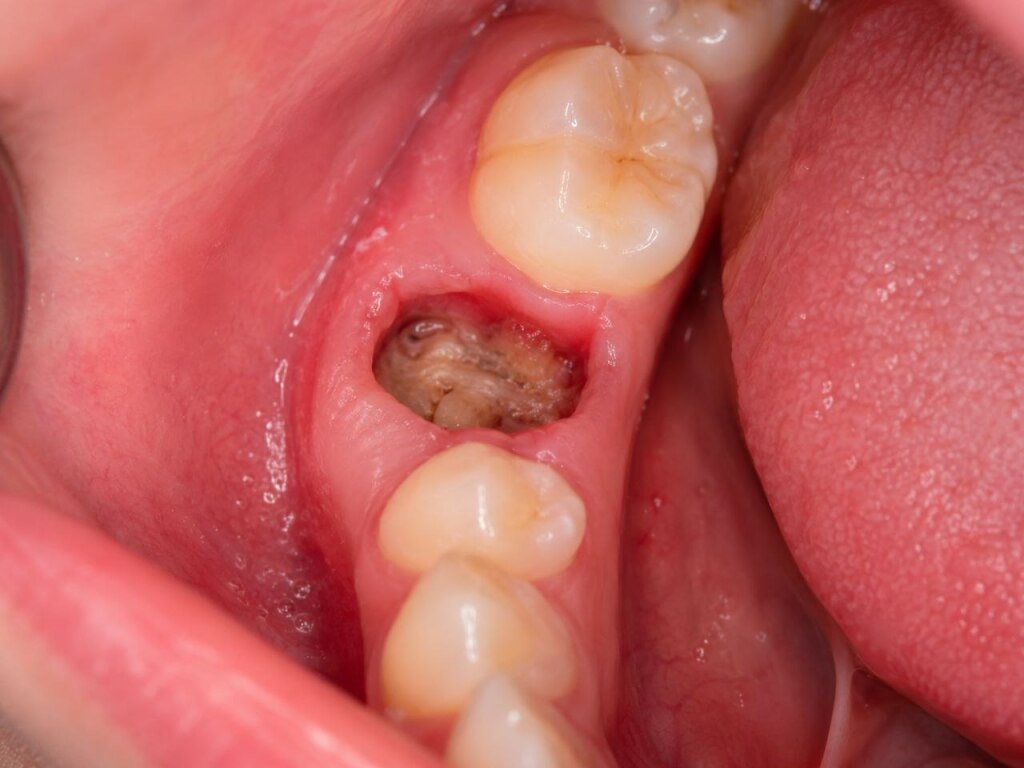
Dry Socket: Causes, Symptoms, Treatment & How to Prevent It
Dry socket, clinically known as alveolar osteitis, is a painful condition that can occur after a tooth extraction.
It happens when the protective blood clot that normally forms in the socket is lost or fails to develop properly, exposing the underlying bone and nerves.
This leads to intense pain, delayed healing, and increased risk of infection.
👉 It is one of the most common complications following tooth extraction, especially after wisdom tooth removal.
What Is Dry Socket?
Dry socket is a post-extraction complication in which the healing process is disrupted by the loss of the blood clot at the extraction site.
Under normal conditions, this clot acts as a protective layer that supports tissue regeneration and shields the bone.
When the clot is dislodged or dissolves prematurely, the bone becomes exposed, causing pain and inflammation.
Why Does Dry Socket Happen?
Dry socket occurs when the normal healing process is interrupted.
The exact cause is not always clear, but several factors increase the risk.
The most important mechanism is the premature breakdown or displacement of the blood clot, which leaves the socket unprotected.
Risk Factors
Certain conditions and behaviors significantly increase the likelihood of developing dry socket.
- Smoking is one of the strongest risk factors, as it reduces blood flow and can physically dislodge the clot.
- Poor oral hygiene and bacterial contamination can interfere with healing.
- Traumatic or difficult extractions, particularly of impacted teeth, also increase risk.
- Hormonal factors, such as oral contraceptive use, may play a role in some cases.
👉 The first few days after the extraction are the most critical for prevention.
Symptoms of Dry Socket
Dry socket typically develops within a few days after a tooth extraction.
The most common symptom is severe, persistent pain that may radiate to the ear, jaw, or surrounding areas.
The pain is often disproportionate to what is expected after a normal extraction.
Other signs may include:
- Visible bone in the extraction site
- Foul odor or bad taste
- Delayed healing
- Increased sensitivity in the area
👉 Unlike normal healing, the pain tends to worsen rather than improve.
How Is Dry Socket Diagnosed?
Diagnosis is based on clinical examination and symptoms.
A dentist will inspect the extraction site to check for loss of the blood clot and exposed bone.
The presence of characteristic pain and delayed healing usually confirms the diagnosis.
Treatment for Dry Socket
Treatment focuses on relieving pain and promoting healing:
- The dentist typically cleans the socket to remove debris and bacteria.
- A medicated dressing may be placed inside the socket to protect the area and reduce pain.
- Pain management with medications may also be recommended.
- The dressing may need to be replaced periodically until symptoms improve.
👉 Treatment does not instantly cure the condition but significantly reduces discomfort and supports healing.
How Long Does Dry Socket Last?
With proper treatment, symptoms usually improve within a few days.
Complete healing of the socket may take one to two weeks.
The duration depends on the severity of the condition and how quickly treatment is initiated.
How to Prevent Dry Socket
Prevention is focused on protecting the blood clot after extraction.
Patients are typically advised to avoid smoking, using straws, or vigorous rinsing in the first few days.
Following post-operative instructions carefully is essential.
Maintaining good oral hygiene without disturbing the extraction site also supports proper healing.
👉 Simple behavioral changes significantly reduce the risk.
Who Is Most at Risk?
Dry socket is more common in adults than in children.
It occurs more frequently after the extraction of lower wisdom teeth due to their position and surgical complexity.
Individuals who smoke or have poor oral hygiene are at higher risk.
Clinical Insight
Dry socket highlights the importance of stable clot formation in wound healing.
The disruption of this early phase can significantly delay recovery and increase pain.
When to See a Dentist
You should seek immediate dental care if:
- You experience severe pain a few days after the extraction
- The pain radiates to other areas
- You notice a bad taste or odor
Early treatment helps control symptoms and prevent complications.
Conclusion
Dry socket is a painful but manageable complication following tooth extraction.
It occurs when the protective blood clot is lost, exposing the underlying bone.
The key points are clear:
- It typically develops a few days after extraction
- It causes intense, persistent pain
- Prevention and early treatment are essential
👉 Following post-operative instructions is the most effective way to reduce risk and avoid complex oral diseases.
Frequently Asked Questions
How common is dry socket?
It occurs in a small percentage of extractions but is more common after wisdom tooth removal.
Is dry socket dangerous?
It is not life-threatening but can be very painful and requires treatment.
Can a dry socket heal on its own?
It may heal over time, but professional treatment significantly reduces pain and speeds recovery.
Does everyone get dry socket after extraction?
No, most extractions heal normally without complications.
Can antibiotics prevent dry socket?
They are not routinely used unless there is a specific indication.
References (APA Style)
Blum, I. R. (2002). Contemporary views on dry socket (alveolar osteitis): A clinical appraisal. International Journal of Oral and Maxillofacial Surgery, 31(3), 309–317.
Kolokythas, A., Olech, E., & Miloro, M. (2010). Alveolar osteitis: A comprehensive review. Oral Surgery, Oral Medicine, Oral Pathology, Oral Radiology, and Endodontology, 109(6), 743–751.
Noroozi, A. R., & Philbert, R. F. (2009). Modern concepts in understanding and management of the “dry socket” syndrome. Oral Surgery, Oral Medicine, Oral Pathology, Oral Radiology, and Endodontology, 107(1), 30–35.