
Oral Leukoplakia: Causes, Symptoms, Risk Factors & When It’s Dangerous
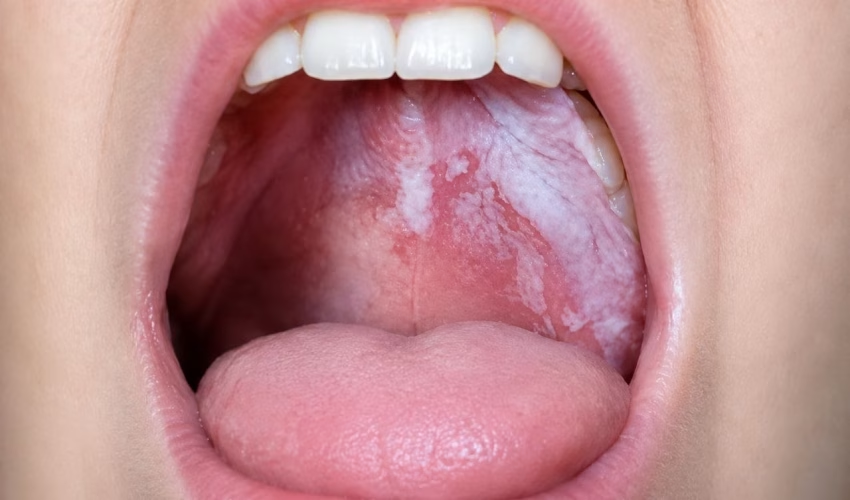
Oral Leukoplakia is a condition characterized by white patches in the mouth that cannot be easily scraped off and cannot be attributed to another identifiable cause.
Unlike common oral coatings or infections, leukoplakia represents a structural change in the oral mucosa, often linked to chronic irritation or cellular alterations.
In many cases, it is benign. However, it is clinically significant because some lesions can develop into oral cancer over time.
👉 This is why leukoplakia is considered a potentially premalignant condition, not just a cosmetic issue.
What Is Oral Leukoplakia?
Leukoplakia is defined as a persistent white lesion of the oral mucosa that cannot be classified as any other disease.
It most commonly appears on the tongue, inner cheeks, gums, or floor of the mouth.
The surface may be smooth, thickened, or slightly rough, depending on the stage and underlying tissue changes.
Unlike conditions such as oral thrush, these patches do not wipe away and are not caused by simple debris or infection.
What Does Leukoplakia Look Like?
The appearance of leukoplakia can vary considerably.
Some lesions are thin and flat, with a uniform white color. Others appear thicker, with irregular surfaces or a slightly raised texture.
In certain cases, areas of redness may be mixed with white patches, a presentation known as erythroleukoplakia, which carries a higher risk of malignant transformation.
👉 The key feature is persistence and resistance to removal.
Why Does Leukoplakia Develop?
Leukoplakia is generally associated with chronic irritation or long-term exposure to harmful stimuli.
These irritants trigger changes in the cells of the oral mucosa, leading to abnormal keratinization and thickening of the tissue.
Over time, repeated exposure can promote cellular alterations that may progress toward dysplasia.
Common Causes and Risk Factors
The most significant risk factor is tobacco use, whether smoked or chewed.
Alcohol consumption also contributes, particularly when combined with tobacco, as both substances have a synergistic effect on oral tissues.
Chronic mechanical irritation, such as rough teeth, poorly fitting dentures, or habitual cheek biting, can also play a role.
In some cases, no clear cause is identified, which makes monitoring even more important.
Is Leukoplakia Cancer?
Leukoplakia itself is not cancer, but it is considered a potential precursor to oral cancer.
Some lesions remain stable for years without changes. Others may undergo cellular alterations known as dysplasia, which can progress to malignancy.
The risk varies depending on factors such as lesion type, location, and patient habits.
👉 Lesions on the tongue or floor of the mouth tend to carry a higher risk.
Symptoms
Leukoplakia is often asymptomatic, especially in its early stages.
Most people notice it as a persistent white patch rather than through discomfort.
In some cases, the affected area may feel slightly thickened or rough when touched.
Pain is not typical unless secondary changes or complications occur.
How Leukoplakia Is Diagnosed
Diagnosis begins with a clinical examination to evaluate the appearance and characteristics of the lesion.
Because leukoplakia is a diagnosis of exclusion, other causes of white lesions must first be ruled out.
If the lesion persists or shows suspicious features, a biopsy is usually performed.
This allows microscopic evaluation to determine whether dysplasia or malignant changes are present.
Types of Oral Leukoplakia
Leukoplakia is not a single uniform condition.
Homogeneous leukoplakia appears as a uniform, flat white patch and generally carries a lower risk.
Non-homogeneous leukoplakia includes mixed red and white areas, nodular surfaces, or irregular textures, and is associated with a higher likelihood of malignant transformation.
Treatment Options
Treatment depends on the cause, severity, and risk profile of the lesion.
🔹 Eliminating Risk Factors
The first step is removing contributing factors.
Stopping tobacco use and reducing alcohol consumption are critical measures that can significantly lower progression risk.
Correcting sources of mechanical irritation may also lead to improvement.
🔹 Monitoring
Some lesions may not require immediate intervention but must be closely monitored.
Regular follow-up allows early detection of any changes in size, texture, or appearance.
🔹 Surgical Removal
If dysplasia is present or the lesion shows high-risk features, removal may be recommended.
This can be done through conventional oral surgery, laser therapy, or other techniques, depending on the case.
Even after removal, recurrence is possible, so ongoing monitoring is essential.
Can Leukoplakia Go Away?
In some cases, especially when caused by irritation, leukoplakia may regress after removing the triggering factor.
However, not all lesions resolve completely, and some persist despite intervention.
👉 Persistence does not necessarily mean cancer, but it always requires attention.
When to Be Concerned
Certain features increase the need for immediate evaluation.
Lesions that change in size, develop red areas, become ulcerated, or persist for more than two weeks should be assessed promptly.
Early detection is critical for preventing progression to more serious conditions.
Prevention
Preventing leukoplakia focuses on reducing exposure to known risk factors.
Avoiding tobacco and limiting alcohol consumption are the most effective strategies.
Maintaining good oral hygiene and addressing dental issues that cause irritation also play a role.
Regular dental check-ups allow early identification of suspicious lesions.
Clinical Insight
Leukoplakia represents a spectrum of tissue changes, ranging from benign thickening to early precancerous alterations.
👉 Its importance lies not in what it is today, but in what it can become if ignored.
Conclusion
Leukoplakia is a clinically significant condition characterized by persistent white patches in the mouth.
While often benign, it carries a variable risk of progression to more severe oral diseases such as oral cancer, making early evaluation essential.
The key points are clear:
- It cannot be scraped off and is not a simple coating
- It is strongly associated with chronic irritation and tobacco use
- Some cases may progress to cancer if left untreated
👉 Early diagnosis and management are critical for long-term oral health.
Frequently Asked Questions
Is leukoplakia always cancerous?
No, but some cases can become cancerous over time.
Can leukoplakia be cured?
It can improve or resolve if the cause is removed, but monitoring is still necessary.
Does leukoplakia hurt?
It is usually painless in the early stages.
How is leukoplakia different from oral thrush?
Leukoplakia cannot be scraped off, while thrush typically can.
When should I see a dentist?
If a white patch lasts more than two weeks or changes in appearance.
References (APA Style)
Warnakulasuriya, S., Johnson, N. W., & van der Waal, I. (2007). Nomenclature and classification of potentially malignant disorders of the oral mucosa. Journal of Oral Pathology & Medicine, 36(10), 575–580.
Neville, B. W., Damm, D. D., Allen, C. M., & Chi, A. C. (2015). Oral and maxillofacial pathology (4th ed.). Elsevier.
Reichart, P. A., & Philipsen, H. P. (2005). Oral erythroplakia—a review. Oral Oncology, 41(6), 551–561.