
Zygomatic Implants: Cost, Procedure, Recovery & Who Needs Them
Zygomatic implants are a specialized type of dental implant used in patients with severe upper jaw bone loss.
Unlike traditional implants that anchor into the jawbone, these implants are placed into the zygomatic bone (cheekbone), which provides stronger support when the maxilla lacks sufficient bone.
This technique allows patients to receive fixed teeth without extensive bone grafting.
What Are Zygomatic Implants?
Zygomatic implants are longer-than-standard implants designed to anchor into the cheekbone rather than the upper jaw.
They are primarily used in complex cases where conventional implants are not possible due to severe bone resorption.
They are considered an advanced solution for extreme bone loss.
Who Needs Zygomatic Implants?
This treatment is typically recommended for patients who:
- Have severe bone loss in the upper jaw
- Are not candidates for traditional dental implants
- Want to avoid extensive bone grafting procedures
- Need full-arch restoration in the upper jaw
They are often used in conjunction with full-arch treatments, including All-on-4 implants or other fixed full-arch implant approaches.
Why Not Use Bone Grafts Instead?
Bone grafting is a common solution for insufficient bone, but it requires:
- Additional surgery
- Longer healing time
- Increased cost
Zygomatic implants bypass these limitations by anchoring into dense cheekbone tissue. This significantly reduces treatment time in complex cases.
The Zygomatic Implant Procedure
The procedure is more complex than standard implant placement and requires specialized training:
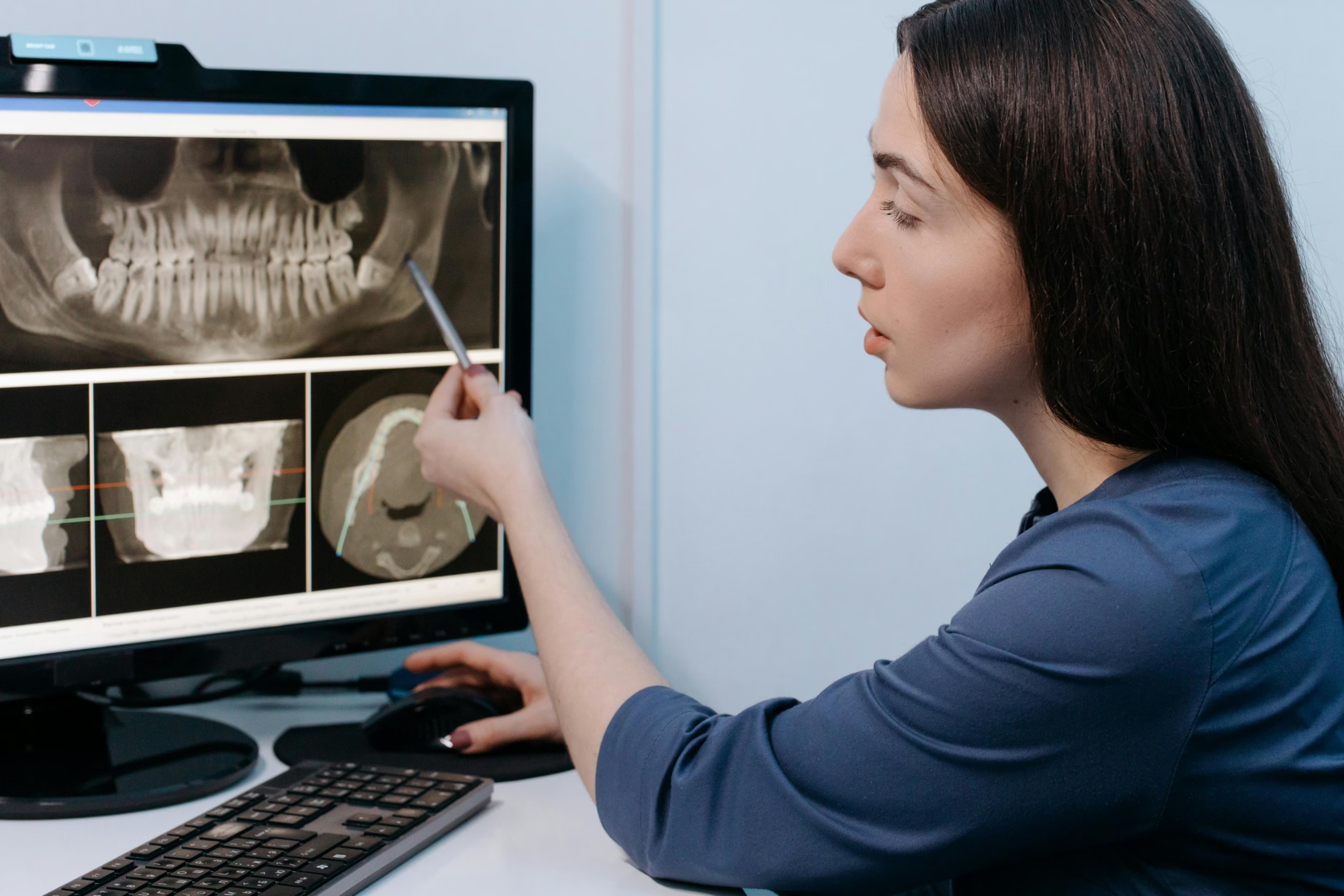
- It begins with a detailed evaluation and imaging to assess bone anatomy.
- Implants are then placed through the upper jaw into the zygomatic bone.
- In many cases, a temporary fixed prosthesis can be placed shortly after surgery.
- After healing, a permanent prosthesis is attached.
Precision is critical due to the anatomical complexity of the area.
Recovery and Healing
Recovery after zygomatic implant surgery may involve more swelling and discomfort compared to standard implants.
Initial healing typically takes a few weeks, while full integration may take several months.
Patients must follow strict post-operative care instructions to ensure proper healing.
Cost of Zygomatic Implants
In the United States, zygomatic implant treatment typically costs:
- $7,000 – $10,000+ for a single tooth implant.
- $30,000 – $60,000+ for a full arch implant.
Costs vary depending on complexity, materials, and provider expertise.
👉 This is one of the most expensive implant procedures due to its complexity.
Benefits of Zygomatic Implants
This technique offers several key advantages:
- It eliminates the need for extensive bone grafting in many cases.
- It allows treatment of patients who would otherwise not qualify for implants.
- It reduces overall treatment time compared to grafting procedures.
- It provides a stable foundation for fixed prosthetics.
- It expands treatment possibilities for complex cases.
Risks and Complications
Zygomatic implants are highly specialized and carry additional risks.
These may include infection, sinus complications, or implant failure. Because of the complexity, the procedure must be performed by an experienced specialist.
👉 Proper planning significantly reduces these risks.
Zygomatic Implants vs Traditional Dental Implants
Traditional implants require sufficient jawbone for placement.
Zygomatic implants bypass this requirement by anchoring into the cheekbone. This makes them ideal for patients with severe bone loss who cannot undergo conventional implant treatment.
Zygomatic Implants vs All-on-4 Implants
All-on-4 implants are often used in patients with moderate bone loss.
Zygomatic implants are reserved for more severe cases where even All-on-4 may not be sufficient without additional support.
👉 In some cases, both techniques are combined for optimal results.
How Long Do Zygomatic Implants Last?
With proper care, zygomatic implants can last for many years or even decades.
Long-term success depends on surgical precision, patient health, and oral hygiene.
Clinical Insight: Zygomatic implants represent one of the most advanced developments in implant dentistry.
By utilizing the dense cheekbone, they provide stability in cases that were previously considered untreatable.
When to See a Specialist
You should consider evaluation if:
- You have been told you are not a candidate for dental implants
- You have severe bone loss in the upper jaw
- You want to avoid extensive bone grafting
Early consultation with a specialist is essential for proper diagnosis and planning.
Conclusion
Zygomatic implants are a highly specialized solution for patients with severe upper jaw bone loss.
They provide a way to achieve fixed teeth without the need for complex grafting procedures.
The key points are clear:
- They anchor into the cheekbone instead of the jaw
- They are used in advanced and complex cases
- They can restore function when traditional implants are not possible
👉 For the right patient, they can be life-changing.
Frequently Asked Questions
Are zygomatic implants safe?
They are safe when performed by experienced specialists, though they are more complex than standard implants.
Are they better than bone grafts?
They are an alternative that can reduce treatment time and avoid additional surgery.
Is the procedure painful?
No. It is performed under anesthesia, with post-operative discomfort managed medically.
How long does recovery take?
Initial recovery takes a few weeks, with full healing over several months.
Can they replace all upper teeth?
Yes, they are often used for full-arch upper restorations.
References
Brånemark, P. I., Gröndahl, K., & Ohrnell, L. O. (2004). Zygoma fixture in the management of advanced atrophy. International Journal of Oral & Maxillofacial Implants, 19(Suppl), 1–13.
Misch, C. E. (2008). Contemporary implant dentistry (3rd ed.). Mosby Elsevier.
Esposito, M., Felice, P., Worthington, H. V. (2013). Interventions for replacing missing teeth. Cochrane Database of Systematic Reviews, (9), CD003815.